


The Tab
I celebrated my twenty-eighth birthday exactly the way I wanted — close friends, bottle service, a gold "Happy Birthday" sign glowing under blue club lights. Then my friend Marco brought over three coworkers "who were in the area," and by the end of the night, two black leather folders arrived at the table with my name on them. This is the story of the most expensive lesson I’ve ever learned.
You never truly know who your friends are until the check comes.
I celebrated my twenty-eighth birthday on a Friday, looking forward to it for weeks. It wasn't anything fancy—just a table at Lumen, the downtown club with blue lights and a sound system that vibrated through your ribs. I asked Marco to take care of the reservation. He had done it before for his own birthday, knew the promoter, and understood the minimums. "Don't worry about it," he assured me, patting my shoulder. "I've got you."
He did get me, but not in the way I expected.
That night, I arrived in a shirt I had bought just for the occasion, carrying that unique sense of lightness that comes when you decide to let yourself be genuinely happy for a night. Marco greeted me with a smile and a hug at the door and guided me to a table near the railing overlooking the dance floor. Already there were six of my close friends — Paola, Derek, the twins, Sergio — people who have known me since college, who've seen me cry over breakups and helped me move apartments twice. It all felt right, as if it belonged to me.
The bottle service was brought out, and someone placed a small gold "Happy Birthday" sign on the table. I recall thinking, this is perfect, exactly what I wanted — simple. Just people who care about me, spending money on my behalf because they wanted to see me happy.
I didn't notice at first when Marco disappeared for ten minutes and returned with three people I didn't recognize. "My coworkers," he explained, waving a hand. "They were in the area. Hope that's cool." I said sure, of course, the more the merrier — what else do you say at your own birthday, standing at the good kind of tipsy, hoping the night keeps being generous?
They didn't sit with us, which should have been my first clue. Instead, they moved to a table just behind ours, closer to the DJ booth, with Marco following them. I saw him flag down a server and speak to her, but I couldn't hear over the bass. A second bottle was ordered, then a third. When I peeked at the ticket the server left, I noticed a different table number, but as I looked closer, I saw my name at the top — not Marco's. Mine.
I convinced myself it was a mistake. I believed the club had made an error with the paperwork and that I would fix it later. I thought a friend wouldn't do something like that, especially on a night that was meant to be mine. I've always been quick to give the benefit of the doubt. I've come to see this as both one of my greatest strengths and one of my worst traits, depending on who is asking and what they seek from me.
By midnight, Marco's coworkers had ordered a bottle of something top-shelf, the kind with a sparkler stuck in the top, which the servers paraded through the crowd like a small ceremonial float. People at other tables turned to watch it pass. I remember feeling proud, even then, some absurd flicker of pride that people were celebrating loudly near my name, not yet understanding that the loudness would cost me.
Around one, Marco leaned over and mentioned that he and his coworkers were heading to another spot, some after-party organized by a friend's friend. "You should come," he suggested, already halfway into his jacket. I said I would join them after finishing up with our table. He nodded as if that was a reasonable plan, like it was the most natural thing in the world, and then he left. His coworkers followed. None of them said goodbye to me directly, and none of them expressed gratitude.
I only realized what was happening when the server brought out two black leather folders—one for each table, both labeled with my name in that cold, corporate font—and announced the total. Suddenly, I felt a slight shift in the ground beneath the comfortable atmosphere of the evening. Two tables. Two tabs. Both under my name, though I had never agreed to the second one, nor sat at it. I had spent the entire night being generous with my doubt about a man I had called a friend for six years.
Paola and Derek both offered to help, but I declined, driven by a wounded pride I can't quite explain. I felt I needed to handle everything myself, unwilling to show how much I had been exploited. While my friends looked on, I paid for both tabs. I remember the total more vividly than most details of the party — $15,000.
I hadn't heard from Marco in three days. When he finally contacted me, it was a casual, cheerful message asking if I had a good birthday. It seemed like nothing unusual had happened—like he hadn't seen me get billed by strangers who didn’t care about who I was or if I enjoyed my night.
I didn't reply immediately; instead, I paused to reflect, like lightly pressing on a bruise to sense its shape. Soon, I realized that it wasn't solely about Marco, but about the distinction between those who truly care and are there for you and those who only seem to show up when it suits them. This distinction is more significant than I initially believed.
I don’t go to Lumen anymore. Not out of anger, exactly — but more so that certain places absorb an evening and hold onto it, and I'd rather not stand under those blue lights again and recall the particular sound of a leather folder sliding across a table, the weight of two bills that were never really mine to carry, and the quiet, necessary lesson about who actually deserves a seat at your table, versus those merely seeking for a table to join because it suits them.
The Player to Be Named Later
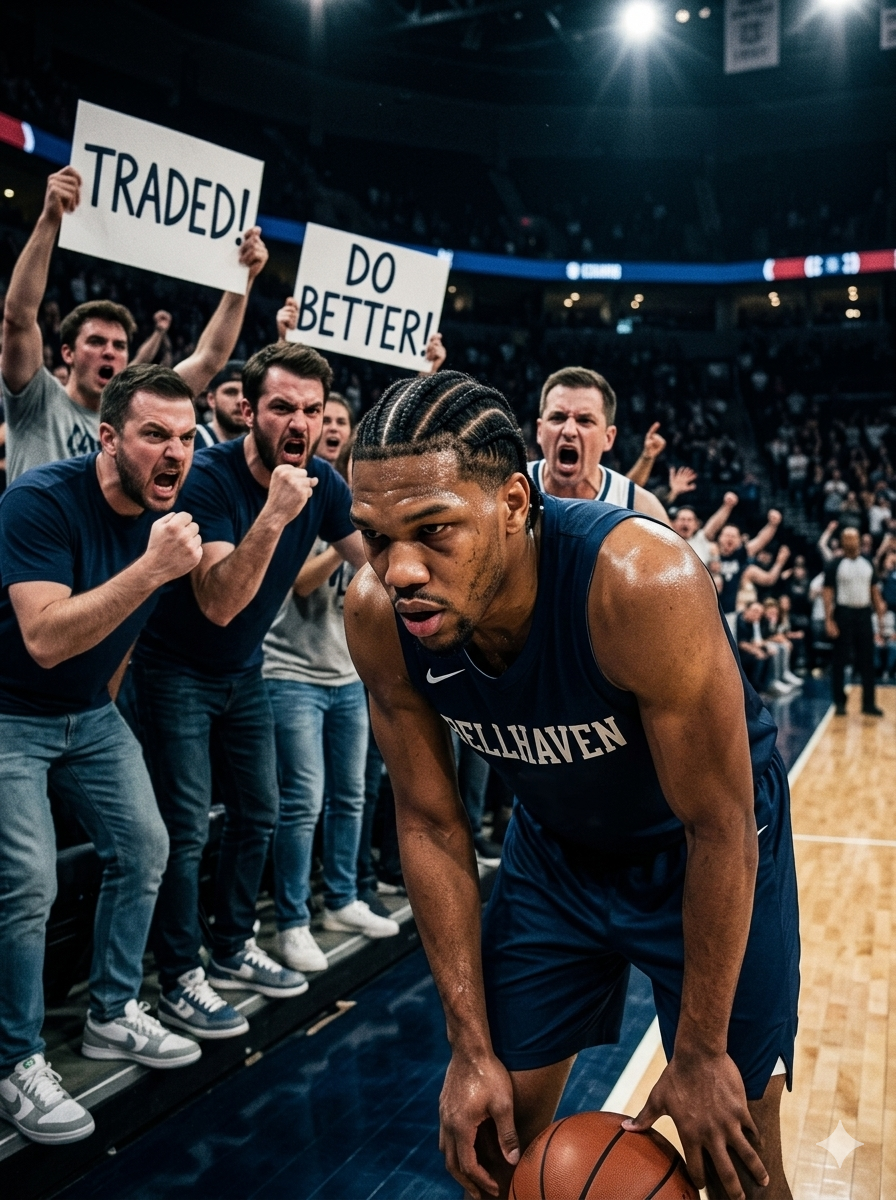
A short story on the mental health side of professional sports. The call came on a Tuesday. "You're going to Bellhaven," his agent said, like he was reading a weather report. For most fans, a trade is just a transaction — a new jersey, a new city, a fresh start. But for Marcus, it was the beginning of something no headline would ever capture: loneliness, depression, and crippling anxiety.
The call came on a Tuesday, fitting since Tuesdays are often seen as ‘nothing’ days. While no one typically makes history on a Tuesday, that doesn’t mean careers can’t be changed on that day.
His agent said, as if announcing the weather, "You're going to Bellhaven. Three years remaining on the deal. It's finished. I'm sorry, man."
Marcus remained silent for a moment. Bellhaven—he had visited twice as a visitor, each time eagerly counting down the hours until the team plane took off again. The arena, located downtown, resembled a bunker, surrounded by chain-link fences and boarded-up storefronts. His teammates would joke about it in the tunnel—warnings like 'don't drink the water,' 'don't walk after dark,' and 'don't even open the bus window.' He'd laughed at those warnings. Never in his mind did he imagine he’d one day have to settle into life there.
"I don't want to go," he said finally.
"I know," his agent replied.
"Is there anything—" he began before his agent interrupted him.
“You have a no-trade kicker that isn't fully vested until next year. There's no leverage to leverage here. I tried, Marcus, I really did. It's either Bellhaven or nothing.”
Marcus felt like he was stuck in a nightmare. “Joke's over, John, this must be just a dream, right?” he asked.
“It’s not Marcus. Pack your bags,” he replied dryly.
The team found him an apartment on the nineteenth floor, which the relocation coordinator called "a great view of the skyline." However, she didn't mention that half of the skyline was obscured by scaffolding and soot-stained bricks. The street below had a rhythm he quickly learned to fear-- a car alarm at 2 a.m., raised voices outside his window, and a silence that felt like a held breath before something happened. Most days, he kept the blinds shut, not because he had to, but because looking outside made him feel depressed and increased his resentment toward the city.
He told himself it would pass within a few weeks. That this readjustment period was only temporary and that he would soon feel like himself again. Besides, every guy who got traded said the first month was the hardest. The issue is that not every guy got traded to Bellhaven. Soon October became November, and still no changes. In fact, he started feeling increasingly lonely, depressed, and homesick. Marcus even began to look forward to away games, as they offered a brief escape from Bellhaven. However, once the game ended, the emptiness returned, signaling it was time to go back to Bellhaven.
After games, he would drive straight back to the apartment without going out to eat or out to the bars with his teammates. His teammates tried a few times to drag him along, but he would make some excuse about his knees or his sleep schedule, and eventually they stopped inviting him. He didn't blame them, as he wouldn’t have been good company. He was miserable and didn’t see a way out of his suffering. He was stuck in a terrible city for the next five months. He would sit in his dim living room, wearing compression sleeves, with the postgame meal cooling in its container. His phone was in his hand, with his thumb hesitating over his old teammates' numbers before he eventually put it down. What was there to say? I'm scared to walk to my own car. I ordered delivery again because I didn't want to see the block. He envisioned his former teammates living their best lives in a lively city—dining at nice restaurants, visiting bars, and spending time with beautiful women or their families, all without concerns for their safety. You didn't say things like that to guys who still got to play in a city that felt like home because they couldn’t empathize with your situation.
He began sleeping poorly, and gradually, that tiredness seeped into his daily life — losing an hour here, experiencing restless nights at 4 a.m. — until fatigue became an integral part of his ide. He stopped reading, stopped calling his sister, and stopped doing the little rituals that used to anchor him: the pregame playlist, the mindfulness app, and the two cups of coffee on the balcony. Of note, there was no balcony he wanted to stand on here. There were just the apartment, the practice facility, and the arena, like three points on a triangle he traced over and over, like a man pacing a cell.
Naturally, his stats began to plummet, with fans noticing his sharp decline before any coach said anything out loud. His shooting percentage dropped six points over six weeks. He was slow to close out on defense — not injured-slow, just absent-slow, as if his mind had checked out somewhere on the drive over and his body was running the play from memory. The local writers, who didn't know him, wrote that he looked disengaged, that maybe the money had made him complacent. And quite frankly, he didn’t blame them because it was the truth—he was checked out and counting down the days until the season ended so he could return home. One column used the word quit. He read it twice in the dark and felt something in his chest go very quiet and very cold.
His coach finally pulled him aside after a January shootaround, not with a lineup change but with a question, "You alright, Marcus? Not in basketball terms, but you."
And it was such a simple question, asked so plainly, that Marcus almost couldn't answer it. He thought about deflecting, as he'd done everything since October. Instead, he chose to be honest and said, "No, I don't like it here. I don't feel safe, and I don't feel like myself." The words came out smaller than he’d meant them to, but they came out.
His coach nodded slowly, like he'd been waiting for someone to say it. "Then let's get you some help. That's not weakness, that's just true," he said.
It wasn't a miraculous turnaround, but it was a start. There was no montage scene or sudden streak of fifteen games where he regained his shot and the city rediscovered its charm. Bellhaven remained Bellhaven — still with boarded-up windows and sirens echoing through his sleep. However, he began seeing a therapist twice a week. He discovered a restaurant three blocks away that felt manageable, then a gym with better lighting, and gradually, a semblance of a routine formed. His stats improved gradually, not all at once.
People often focus on the box score — the shots made, missed, blocks, and minutes — but overlook the hidden layers: the nineteenth floor, the closed blinds, or a man sitting in darkness because the cost of facing it was too high. These unseen struggles are the part nobody trades or includes in any contract.
That's the human side of sports.
The “No Tip” Button
I’m not a confrontational person by any means, especially at restaurants. But after witnessing such egregious retaliation for not leaving a tip for a take-out service, I had to speak up. Here’s the story:
I almost didn't see it. That's what I keep telling people. If I had looked down at my phone for one more second and not glanced up at the passing window, I'd have eaten it and never known.
I was at Rosalind's Grill, a small counter-service spot off Route 9, popular for quick lunches from guys on break and moms with strollers. I ordered a double cheeseburger and fries, paid with my card at the small screen, and quickly selected the "no tip" option. I didn’t do it out of spite, but because it was a counter order—no one had done anything yet that deserved a tip.
While waiting for my number to be called, I looked toward the kitchen window and saw the cook—who appeared to be in his mid-twenties, wearing a hairnet and a name tag that read Marcus—glance at the ticket, say something to the person beside him I couldn't hear, and then deliberately spit on my burger. His action was clearly intentional and not subtle or accidental.
I paused briefly, stunned by what I had just seen. Then, my number was called, and the same person placed the bag on the counter, sliding it toward me with a look that seemed to challenge me to say anything.
So I accepted his challenge, called him over, and said calmly: "I need this remade, because I saw what he just did.”
He didn't even flinch, firing back, "Saw what?"
"You spit on my burger," I replied firmly.
"Man, I don't know what you're talking about," he said flatly, bored, as if reciting a line he already knew he wouldn't need to sell very hard, because who was going to believe the customer over the guy behind the counter?
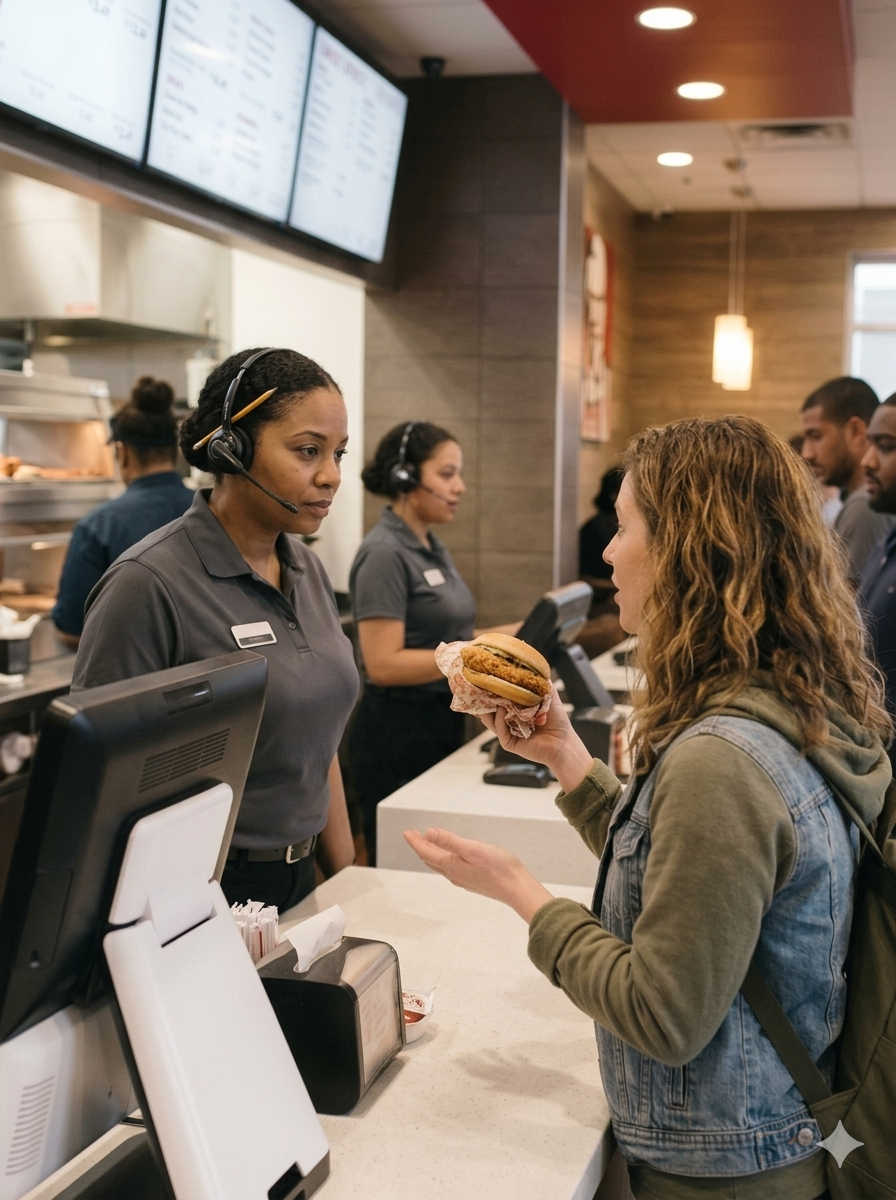
The manager, or someone who looked like one, with a polo shirt and a clipboard, approached me. I explained the situation again, this time more calmly, but she responded with attitude and accused me of lying. “If you’re so sure Marcus spat on your burger, then where’s your proof?” she asked angrily. I nearly lost my temper, but I stayed calm and told them I would leave once my burger was remade. She rolled her eyes and told Marcus to remake it. “Marcus, remake the Karen’s burger before she calls the cops on us,” she mocked.
I stepped back to wait and then heard Marcus loudly criticizing the person beside him, saying something like "entitled cheap Karen didn't even tip, now I have to remake this order," followed by some words I won't repeat. I took out my phone and began recording because I suspected Marcus might spit on my burger again, and I wanted proof. A few seconds into recording, he did just that, spitting directly onto the freshly made burger before it was wrapped.
Marcus was at the pass window, holding the ticket and speaking loudly enough for three customers to hear. Then, he clearly leaned forward and spat directly onto the bun before closing the box. All of this was captured on video, leaving no doubt.
I didn't ask my burger to be remade a third time because Marcus’ actions had made me lose my appetite; instead, I walked up while still recording and asked for a refund. The manager was about to give me more attitude until she saw me recording.
“I have proof,” I said calmly, “I’m sure the press and the Health Inspector will have a field day with this one.”
“See if I care, Karen. Get out of my restaurant before I have you removed for trespassing,” she yelled. “And by the way, don’t even think about walking out of here with a refund.”
“Sounds good,” I replied while walking away.
I sat in my car in the parking lot for about ten minutes, overwhelmed with disgust at what I had seen. If Marcus spit on my burger so shamelessly, then he probably had done it before. Just imagining many people unknowingly eating a burger he'd spat on made me almost gag.
I am generally not confrontational, especially in restaurants. If they had remade my burger without any problems, I would have simply left with my food and without causing a scene. Furthermore, if the manager hadn’t challenged me, I wouldn’t be sharing this story with you today. However, witnessing something so egregious and offensive as spitting in food as retaliation for not tipping for counter service compelled me to speak out.
That night, I uploaded the video to social media, tagging every major news outlet. I kept the caption minimal, letting the video speak for itself, and included a still frame from the second spat to prevent any misinterpretation of the angle. I also filled out the county health department's complaint form, attaching the video and describing both incidents, because, as I mentioned earlier, unless someone with the authority to shut down the kitchen saw it, it probably wouldn't be the last time Marcus spat on a burger.
Naturally, the video quickly went viral, drawing millions of viewers. By the next morning, news vans lined up outside Rosalind's Grill, and by the afternoon, the county inspector's office announced they had launched a case and shut down the restaurant until their inspection was finished. I later learned Marcus was fired before the health inspector arrived, and the manager was suspended ‘indefinitely’ pending an internal review. This didn't surprise me and didn't seem like enough.
I still think about the burger I almost ate and how an unclicked “no tip” button enraged a person to the point that they felt justified to spit on someone’s food. Ironically, he called me entitled when he was just projecting his own entitlement onto me, believing he deserved a tip for simply doing his job. On the other hand, I am still disgusted by how a manager would defend, or rather condone, such evil actions. I stopped ordering fast food, which, honestly, is much better for my health, simply because I no longer trust employees not to spit on my food if I don’t leave a tip.
The Game I Lost
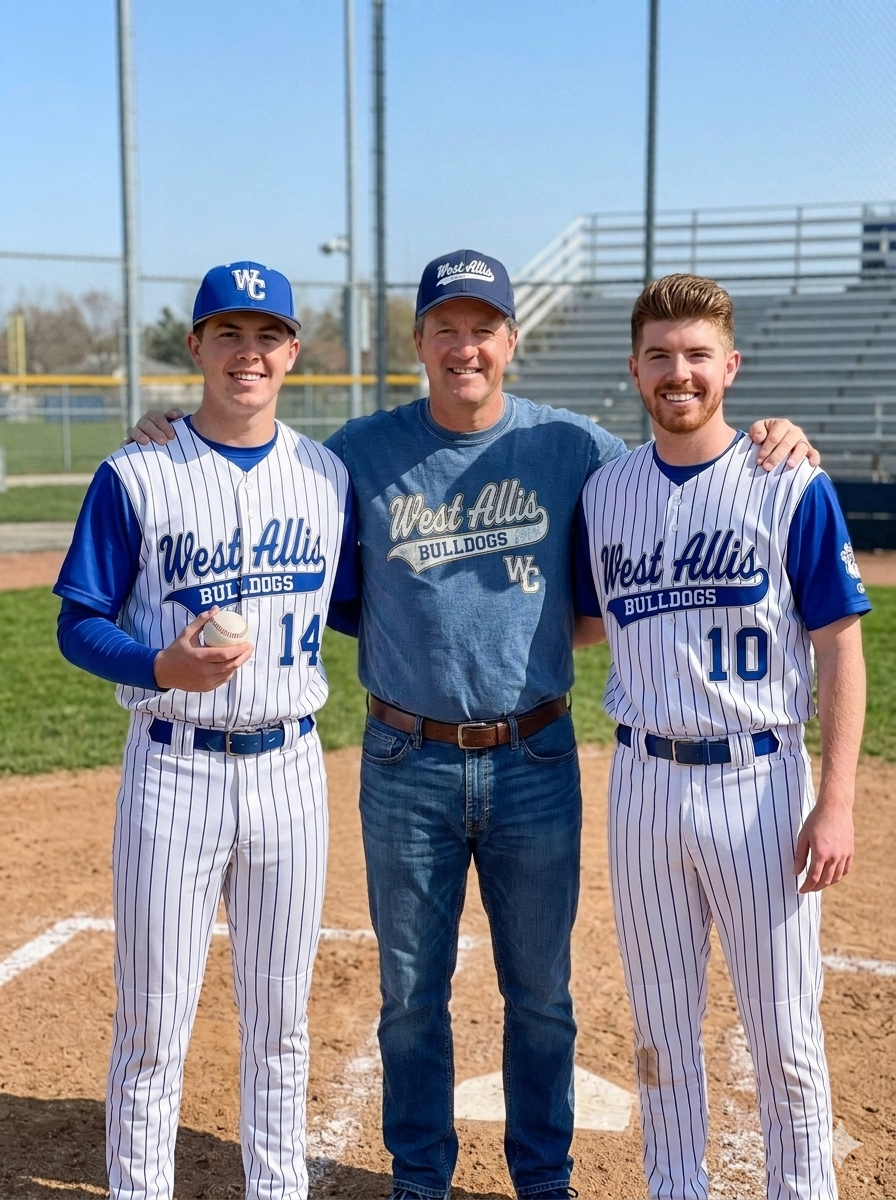
My brother and I were raised by the same father, under the same roof — but not the same rules. One of us was allowed to strike out and laugh about it. The other wasn't allowed to strike out at all. Only one of us made it to the pros.
Some grief doesn't come with a funeral, flowers, or speeches about what was lost. It's the grief of a life that almost was—a fleeting, vivid version of yourself that vanished before anyone could see it. You can't mourn it openly, nor can you explain it to people without sounding bitter, petty, or ungrateful. As a result, you mostly bear it alone.
I have carried mine for twelve years.
His name is Danny, and he is everything I was supposed to be—a professional baseball player.
I occasionally watch him on TV — more often than I probably should, to be honest. Last Sunday, I was sitting on my couch with a bowl of cereal going soggy in my lap when I watched him handle a ground ball in the seventh inning, bare-hand a dribbler with his bare hand, and throw to first with a relaxed, natural confidence that seems effortless from the stands. The crowd roared in the background, and the commentator mentioned his name with a special reverence for players who make difficult plays look graceful.
I turned the volume down and sat in the quiet for a long time after.
Danny is twenty-four, and I am twenty-eight. We grew up in the same house, sharing the backyard, swinging from the same batting cage our father attached to the oak tree when I was seven and Danny was three. We ate the same cereal, wore hand-me-down cleats, and watched baseball games religiously.
However, we were not raised the same way. That subtle, invisible difference to outsiders became the fault line that fractured both my athletic career and my life.
My father loved baseball passionately, as if he had never quite moved on from missed opportunities. He coached Little League until political conflicts pushed him away, argued with TVs, and studied box scores with the dedication of a scholar analyzing sacred texts. When I displayed genuine talent — the kind that made coaches pull my father aside to say "keep an eye on this one — something shifted in him. He looked at me differently. I had become more than just a son; I was now a second chance for him to reach the big leagues.
And second chances, in my father's hands, were not gentle things.
The expectations came before I was prepared. Extra practice while other kids left. Film sessions in the living room, where he paused, rewound, and pointed out every flaw with a patience that felt more like prosecution than teaching. If I went two-for-four, he asked about the two misses. If I made a perfect play in the field, he'd point out the one step I took late. Wins were quickly acknowledged, but failures were dissected in detail.
It was neuroticism in its purest form.
I remember being eleven and crying in the car after a game where I struck out with the bases loaded. My father didn't say anything for twenty minutes—no comforting words, no harsh ones—just silence, which felt worse than either. When he finally broke the silence, he said, 'You choked. We'll work on it this week,' then launched into a rant about discipline and focus that I tuned out. When he saw I wasn’t listening, he turned on the radio and drove home angrily. When I asked to stop for food, he looked at me with disgust and told me I didn’t deserve it.
I don't believe he intended to hurt me, and as an adult, I genuinely want to hold onto that belief. For years, I've tried to extend grace because he's my father, and I know he wasn't cruel in the traditional sense. He didn't hit me or belittle me in front of my teammates. Instead, his approach was more subtle and, in some ways, more difficult to identify — he made the game conditional. My worth was tied to whether I made mistakes, feeling like I was always just one error away from losing it. Most importantly, he instilled fear in me and fostered resentment towards the game I once loved.
And fear, in an athlete, is a kind of death.
By fifteen, I had developed what I now recognize as an anxiety disorder, though at the time I simply called it the freeze or the yips. It would strike unpredictably—before at-bats, while waiting in the field, or during the car ride to games. I would suddenly freeze, feeling as if every circuit in my body had tripped. My hands would turn cold, my vision would narrow, and instead of clarity, my mind would spiral into worst-case scenarios—like a strikeout, my father's silence, or the look on his face that said, 'You almost had it.' Ironically, these episodes often occurred during the most critical moments of the game.
I stopped focusing on power and average, and my once fluid mechanics became stiff, making me move more like a robot than a human. The tools and talent were still there, but talent needs a foundation of freedom to thrive. Mine had been gradually stifled by anxiety, dread, and the exhausting effort of playing not to lose rather than playing to win.
After finishing high school, I stopped playing baseball and told my father I had lost interest. I let him think it was a straightforward decision because the reality — that he had taken away what I loved and made me afraid of it — felt overwhelming and too painful to admit. Additionally, I wanted to avoid the consequences of revealing my true feelings.
He seemed surprised but more disappointed. Then, eventually, he turned his attention to Danny.
Here is the part that cuts deepest, the part I have never said to anyone in these exact words:
My father was different with Danny.
I'm unsure whether he learned something from watching me fade or if his gentleness was simply the natural softenng of a man five years older and slightly less hungry. However, the father who coached Danny was not the same as the one who coached me. With Danny, he embraced failures as much as successes. I've overheard him recount Danny's worst Little League game— three errors, two strikeouts, a wild throw nearly hitting the umpire — as if it were a cherished comedy. Everyone would laugh. Danny would laugh. My father would pat him on the shoulder and say, That was the day I saw he had grit, because he returned the following week ready to play.
I excused myself to the bathroom and stood at the sink until the feeling passed. If I had done that, I would have probably been sent to bed without dinner.
It wasn't the cruelty itself that mattered, but its absence—extended to my brother and denied to me. Danny was permitted to fail without repercussions, so failure ceased to be frightening. He could take risks because there was no disaster lurking behind a mistake. As a result, he cultivated a key trait that distinguishes good athletes from great ones: the capacity to move past a bad moment.
I never had that because my father never granted me that wish. I love my brother. I want to be clear about that, because what I am about to say lives alongside that love and does not cancel it, even though I wish it did.
There are moments — shameful, small, selfish moments that I would never speak into existence in his presence — when I wish he hadn't made it.
Not because I want him to suffer or resenting his genuine achievements, which are earned through years of hard work despite the advantages I never received. Rather, his success serves as a reflection I can't avoid, constantly reminding me of what could have been mine. The crowds cheering for him — those cheers could have been for me. The scouts, the contracts, his effortless navigation through life with baseball as his guide — that whole life was meant for me. I was the one they first talked about. I was the one with the arm, the instincts, and the potential that coaches looked at and said was sky-high.
And I lost it not due to injury, lack of talent, or random fate's cruelty — but because of fear. Fear that was gradually instilled in me over many years by the man who was meant to be my strongest supporter.
That is the grief I carry now alone.
I've been in therapy for two years now, which is later than I needed, but earlier than I might have started without hitting a specific wall at twenty-six — the depression that didn't arrive with a bang but gradually dimmed like a slowly failing light. I see Dr. Osei, who has a unique gift for listening in a way that makes you feel truly heard without revealing too much. She's helped me realize that my father's actions, regardless of his intentions, caused real harm. She's also helped me identify aspects of myself I spent years avoiding.
She has also gently, persistently asked me to consider what healing looks like when the reminder of your wound is on television daily for seven to eight months out of the year.
Admittedly, I don't have a clean answer yet.
Here's what I experience: a slow-growing ability to watch Danny play without completely detaching from myself. I can feel both grief and pride at the same time, without allowing the grief to overpower the pride. I call him after a good game and sincerely say, 'you were incredible'—because he was, my pain is not his fault, and he is my brother whom I love, even when that love hurts.
But I will not pretend I am healed, nor will I perform a peace I haven't earned.
Some nights I close my eyes and pick up an invisible bat in the quiet of my apartment, and take a slow, perfect swing — the swing I had at fifteen, before the freeze, before the fear — and I let myself feel, just for a moment, what it was to love baseball before someone taught me to be afraid of it.
Then I open my eyes, put the bat down, and carry on with my life.

The Fringe Friend
Everything seemed normal. The group chat, the dinners, a year and a half of what I thought was real friendship. Then one night, through a screen door, I heard the truth. I'm not going to tell you what they said. You have to read it.
A particular kind of loneliness isn't caused by solitude. Instead, it's when you're in a crowd and suddenly realize, with painful clarity, that you're the only one unaware of the true reason you were invited.
I know that loneliness now.
My name is not important. What matters is that I've always existed slightly outside the main social orbit — close enough to feel warmth but never fully in the ‘inner circle’. I've never found it easy to make friends. I watch others do it and feel the way I imagine someone who can't dance might feel watching dancers: a mix of admiration and a quiet, personal longing. Some people find connection effortlessly, walking into rooms and naturally drawing others in without knowing why. That has never been me.
I am dependable, considerate, and attentive. I remember birthdays without reminders. I ask follow-up questions because I truly listen the first time. I arrive when I say I will, sometimes even earlier than expected. People tell me I am a good listener, which I understand as a compliment for giving more than I take, even if they don't always see that imbalance.
I have known this particular group for about a year and a half—initially as coworkers, and over time, it has started to feel like a friendship to me. There were six of them. Around the third month, I was added to their group chat, which I saw as a kind of social entry. They occasionally invited me to after-work drinks and a few dinners. One memorable birthday gathering in November, where I gave a meaningful gift and felt a warm sense of inclusion all evening.
And then there was Priya.
Priya came to mind when I thought of the word ‘friend’ in this group. She sat two desks away from me, and we shared a quiet, growing closeness through proximity — sharing lunches, small confidences, and a gentle daily warmth that I perhaps exaggerated into something more significant. She sometimes laughed at my jokes and messaged me privately, which I interpreted as proof that I was more than just an average member of the group. I trusted her in the straightforward way that people trust those who haven't yet given them a reason not to.
That was my mistake.
The invitation came on a Thursday evening, through the group chat.
Weekend trip — lake house rental two weeks from now. Costs are tight, but if we get enough people, it works out. Who's in?
I stared at it for a moment, then typed back: I'm in.
What happened afterward, I now realize, was not genuine enthusiasm for my company but rather the specific relief of a group performing calculations.
Over the following week, all the details fell into place. There was a rented lake house for two nights, a Saturday dinner reservation at a waterfront restaurant that required a party of at least eight, an excursion with a local kayaking company that had a group minimum, and a nightclub with table service that was affordable only for eight or more. I now realize that the logistics came before the invitation. I wasn't included because someone thought it would be great to have her there. I was added because someone saw a spreadsheet and decided we needed one more person.
At the time, I didn't realize this. I only saw a weekend spent with people who wanted me there, and in the days leading up to it, I experienced a quiet, almost tender happiness — the kind that arises when social connection, which has often felt just out of reach, suddenly feels within grasp.
We arrived at the lake house on a Friday evening, and for the first hour, everything appeared normal—like the calm before you fully understand a situation. We unpacked, opened wine, and someone played music. I experienced that familiar, comfortable warmth I always feel in group settings when I finally stop monitoring myself long enough to simply exist.
Then I went inside to refill my drink, and that was when I overheard a conversation on the back porch through the screen door.
"I genuinely can't stand her," said Marcus, the trip organizer. His tone was flat, reflecting casual cruelty — not anger, but certainty. "She's overwhelming—the way she talks, the way she's always on."
I heard Dani laugh. "She's so naive—she actually believes we invited her because we like her."
Someone, possibly Jonah, said, "We needed the numbers," followed by, "Once we're settled tomorrow, we ditch. Tell her there wasn't room at the restaurant or something."
More laughter. Easy, relaxed laughter, the kind you make when nothing is at stake.
"She'll probably just wander around, thinking she did something wrong," Dani mocked.
And then — and this is the part that didn't just hurt but felt like something fundamental breaking — I heard Priya's voice.
She didn't defend me or offer any small reassurances like saying 'come on' or 'that's a bit much,' which a true friend might do in that situation. Instead, what she said was this:
"I know, right? She texted me separately to say how excited she was." A pause, then laughter I recognized from when I had made her laugh like that before, sitting two desks apart. "I didn't have the heart to tell her."
More laughter—the shared sound of people feeling relaxed and at ease.
I stood in the kitchen, hand on the counter, experiencing that sharp, nauseating feeling as if the floor was suddenly slipping away beneath a version of myself I hadn't yet recognized as fragile. After a year and a half of sincere belief—through group chats, dinners, birthday gatherings, and Priya's separate messages—their true nature was revealed in an instant: not genuine friendship, but merely utility masquerading as it.
How can someone be so naïve?
I stood there for another ten seconds. Then I set my glass down quietly on the counter, walked to the room where I'd left my bag, picked it up, and walked out the front door without saying goodbye.
I did not slam anything, cry where they could see me, or give them the satisfaction of a scene that could later be reframed as See, this is why she's a lot. I simply left the way you leave a place once you understand you were never truly welcome there.
I summoned a car from the end of the driveway, where I sat on my suitcase in the early evening darkness. I held back my tears until the driver's headlights appeared at the top of the road. Once inside, I forced a calm expression and kept my gaze out the window all the way to the train station, listening to a playlist I hadn't created softly playing from the speakers.
What I experienced was not overtly dramatic, but a profound, silent grief. It wasn't the sharp sting of a sudden loss, but rather the dull, lingering pain of realizing something long overlooked had finally been diagnosed. I reflected on every dinner, every after-work drink, every quiet, contented walk home—each moment filled with private gratitude, unaware that I alone was invested in something the others weren't constructing.
I thought about Priya most.
Not with anger, exactly — or not only with anger. With the specific sorrow of someone who made something real from material that was never real to begin with. She had laughed, added to it, and offered my private excitement to the group's amusement as if it were nothing. As if I were nothing.
That was heartbreaking.
A few days later, I would learn through the particular grapevine of mutual coworkers that the evening collapsed with impressive speed.
The reservation required eight people, and since there were only seven, the host refused to seat them. The next morning's kayaking trip required a minimum booking, with no refunds for no-shows — the slot I paid for was lost, and the numbers no longer matched. The Saturday night table at the club, originally negotiated for eight at a reasonable rate, became less accessible with only seven people.
I did not feel guilty about any of this. Some part of me, the part that had sat on a suitcase in the dark, waiting for a car, felt something close to a clean, quiet satisfaction — not exactly vindictive, but the particular rightness of consequences arriving on time.
My phone began buzzing around ten that night.
The first three calls came from numbers I didn't recognize. Then came the one I knew I would eventually have to answer—Priya.
I let it ring twice, giving myself the moment to decide who I wanted to be in the next five minutes. Then I picked up the phone.
"Oh my gosh, where did you go?" Her voice was warm with feigned concern, perfectly calibrated — the voice she used when she wanted something, which I now recognized because I had never had reason to name it before. "We've been so worried. You just disappeared. Is everything okay? Did something happen?"
Innocent and smooth, the voice of someone unaware of what I heard, acting as a friend who has always been kind.
I let her finish.
Then I said, very calmly: "You're right. I was naive."
A pause. "What?"
"For believing you were my friend. That was naive of me; I own that," I continued.
"I don't — what are you talking about? What happened? Why did you leave?" she asked.
I could hear something shifting in her voice beneath the performance — a faint anxiety, the sound of someone trying to gauge how much I knew without revealing how much there was to know.
"Have fun with your friends," I said.
And I hung up.
I won't say I'm fine. I won't package this as a lesson learned or claim I walked away with gratitude for the clarity. That's the sort of ending people craft to appear healed, but I am not there yet. Pretending otherwise would be a disservice to anyone who has ever stood in a kitchen, quietly set down a glass, and realized something devastating about how they had been seen.
What I will tell you is this:
I returned home alone, unpacked my bag, which included a swimsuit I'll probably donate, and deleted the playlist.
Then I faced the challenging task of realizing that being used doesn't mean I was foolish to trust—it means I trusted the wrong people. My ability for loyalty, warmth, and real investment in others isn't a mistake. Their fault, and it will stay with them in ways they haven't yet understood, seen in how easily they laughed and how quickly they dialed once the consequences hit.
I now know, with a certainty that surprised me as I sat in my quiet apartment on a Friday night that was supposed to be something else entirely, that I will not make myself smaller to fit the space people like that are willing to give me.
Not anymore.

The Doorbell Camera
While Jordan was three hours away at his grandma's lake house, his phone showed his girlfriend's location pinging from HIS apartment — the one he shares with his roommate. A butt-dial later, he heard everything he wasn't supposed to hear.
The last time Jordan relied on his instincts without hesitation, it saved him on the interstate — he swerved just half a second before a truck jackknifed into his lane. That feeling should have stayed with him. However, three days into a family trip to his grandmother's lake house, his gut warned him again, and this time he nearly dismissed it.
It was Thursday night. Jordan had tried calling Maddie four times earlier that day—routine after three years of a relationship based on frequent check-ins, good-morning texts, and goodnight calls. She usually picked up by the second ring, but this time, there was no answer. Instead, it went straight to voicemail twice.
At first, he panicked because Maddie wasn't the type to be without her phone. He convinced himself she was likely in the shower, her phone had died, or she was out with her sister, as she'd mentioned. Anything to stave off his growing anxiety during his vacation. He resumed enjoying his time at the lake and tried calling again about two hours later. That call also went unanswered, and a cold feeling took hold in his stomach, more intense than any excuse could soothe.
Anxiety started to take over him. What if Maddie needed help? So, he opened Find My Friends and saw her location was at his address. Initially, he thought it was a glitch, as Maddie had no reason to be at his apartment while he was out of town.
He refreshed the app, only to see the small blue dot still in the wrong spot—at his apartment. The same place he shared with his roommate Tyler while he was three hours away, enjoying his grandmother's pot roast and pretending everything was fine.
Jordan's hands were steady when he called her again. That surprised him later, how steady. Some part of him already knew. She picked up on the third ring this time. But something was off — Maddie’s voice was distant, tinny, like the phone wasn't up to her ear.
"Hello? Babe?" he said.
No response, just muffled sound, footsteps, the specific metallic clink of keys.
He nearly hung up, but then he heard Tyler's quiet, laughing voice say, "You gonna get that?"
"It's okay, he's about three hours away," Maddie said, and Jordan was suddenly hit with the realization that she'd accidentally butt-dialed him, or she thought she had declined the call but hadn't. Either way, she had no clue he was listening.
"You sure?" Tyler said.
"He's so stupid, he has no idea," Maddie laughed. "Like, none. This is so bad."
"You're the one who wanted to do this in his apartment," Tyler said, and there was a smile in his voice too, the easy tone of a man who'd stopped feeling guilty a while ago.
"It's hot," she said. "The risk and adrenaline turn me on. Come here."
Jordan sat frozen on his grandmother's back porch, phone pressed to his ear, listening to his girlfriend of three years and his roommate of two laugh about how stupid he was, seconds before the unmistakable sound of a kiss, wet and unhurried, followed by the door — his door — opening.
He remained silent and recorded the call as evidence, anticipating Maddie might gaslight him upon his return.
Later, he opened his doorbell camera app and downloaded the footage from their meeting. He credited Tyler for this, since Tyler had pushed for its installation after a package was stolen last winter. In a moment of lust, Tyler overlooked the camera and the fact that Jordan could view the footage.
There they were—Maddie, wearing the small jean jacket he had given her for her birthday, wrapped around Tyler on the front step. The kiss, her high, carefree laugh, and then the words, clearly heard through the camera's mic: "God, he's so stupid, right? He has no idea."
Tyler's response, quieter yet still audible: "Let's just not talk about him right now."
The door opens and closes. Timestamp: 9:47 PM, the same night Jordan called five times and received only silence.
He didn't leave early or contact her—no calls, texts, or messages for four days. Instead, Jordan completed his trip, helped his grandmother clean her garage, and went fishing with his dad, all without mentioning any of it. He understood that no words could change what he already knew, and he needed this time to figure out not if he was leaving, but how.
When he returned home Sunday night, Maddie was at the apartment, curled up on the couch as if nothing had changed, scrolling her phone. She looked up and smiled the same smile she had been giving him for three years.
"Hey, babe," she said. "How was the trip?"
"We need to talk," Jordan said, and something in his voice made her sit up straighter.
"Is everything okay?" she asked, feigning concern.
"Where's Tyler?" he responded abruptly.
"I don't know, work, probably? Why?" she asked in a startled tone.
Jordan ignored the call, headed to his room, retrieved his suitcase from where he had stored it, and began packing—only essentials for the week: clothes, laptop, charger, and a framed photo of his mom from the dresser.
"Jordan, what is going on?" Maddie followed him, her voice climbing toward panic. "You're scaring me."
"Thursday night," he said, still folding shirts. "You didn't answer your phone."
"I told you I was at my sister's. My phone died—" she stuttered.
"Your location said you were here," he interrupted.
She hesitated, just half a second too long. "I— I came back to grab something. I forgot to mention it. It wasn't a big deal—"
"I called you again and you picked up. But you didn't know it connected," he stated firmly.
Maddie visibly lost color immediately.
I don't—I don't know what you think you heard, but you're misinterpreting this. You're being paranoid. This is exactly the kind of thing that—she babbled, frantically trying to find an excuse.
"I have the doorbell footage," Jordan said quietly. "Audio and video."
She opened her mouth to argue, a new denial already forming, but Jordan interrupted by holding up his phone and pressing play. Her own voice echoed in the room: "He's so stupid, he has no idea." Then came the kiss, followed by the timestamp.
“That’s a fake video! Where’d you get that?” she accused.
Jordan stared at her quietly and simply said, “It’s over, Maddie; we’re done.”
She began crying and pleading with Jordan not to go. She tried to hold onto him, begging him to communicate, insisting it was a mistake.
But Jordan didn't say anything else because there was nothing more to say. Maddie made a decision and chose Tyler over him.
Jordan swiftly packed his suitcase, carried it, and headed toward the door. She reached out and called his name as if it still held significance, but he softly pulled away without yelling or using physical force.
He stepped out the door he had stood in front of four nights earlier, passing the camera that revealed everything he needed to see, descending the stairs, and entering the parking lot where the evening air seemed fresher than it had in years. He didn't glance back, didn't slam the door—just calmly walked away, confident and focused, already planning where he'd sleep that night and imagining the relief of waking up tomorrow without needing to explain himself to anyone.

The Cost of Peace
He kept paying so everyone else could stay "peaceful." Then one trip broke six years of silence. Part storytime, part warning label for anyone who's ever been the "reasonable one" in a toxic family dynamic
The Cost of Peace is a story about the quiet, invisible price of keeping everyone else comfortable — and the moment one man decided he was done being the family ATM disguised as "keeping the peace."
I want to say it happened all at once, but that's not accurate. It took place over six years, one trip at a time, until the burden became too great to bear into the seventh year.
My wife's sister, Renata, had a knack for arriving unexpectedly. Not just visiting, but arriving like a weather front—sudden, overwhelming, and demanding you rearrange your plans. When we scheduled our first anniversary trip to Tulum, Renata overheard the call, which was meant to be about something else, and within a week, she booked her own flight "to make it a "girls' trip" for a few days, but it ended up lasting the entire week—my carefully saved week off, earned through a year's worth of overtime. And to top it off, she manipulated my wife into coercing me to pay for her hotel.
I convinced myself it was a one-time incident. I reasoned that sisters are close, and my wife, Claudia, brightened whenever Renata was near. I loved Claudia enough to want her to be happy, even if it meant sharing our anniversary with her sister, who was casually flipping through the resort's cocktail menu as if it were a menu at a restaurant financed by someone else—namely, me.
Renata never offered to pay for anything—be it a meal, cab, or her part of the villa. She always insisted on having her own room, never splitting costs to save money. At dinner, she would order lobster, aged steak, and a bottle of wine pricier than her meal, acting as if it was her right just for being there. When the check came, she'd invent excuses—like needing to check her phone or start a story—so no one would bring up paying. I found myself always footing the bill, which was incredibly frustrating. I felt trapped in a no-win situation: if I confronted her, she’d play the victim and manipulate my wife emotionally, risking our marriage; if I kept quiet and paid, I would harm my finances and emotional health.
I gently brought up the idea a few times: "Maybe next trip, Renata can share the room with us." Claudia would agree, nodding in understanding, but nothing would change. When the time came and Renata pouted about needing her privacy, Claudia would give in easily. I convinced myself it was only six days a year and that I needed to accept my family as they are, even if they are complicated. Honestly, I told myself many things to avoid facing the truth: that my marriage had a hole shaped exactly like her sister, and that gap was draining me emotionally—more than just financially. It was wearing down my patience, my self-respect, and subtly, my respect for Claudia as well.
The trip that broke it was meant to be small — just four days in the mountains with Claudia and me, without inviting anyone else. However, Renata found out regardless, as she always did. On the morning we were to leave, she arrived with a suitcase, a smile, and such a complete assumption that she didn't even realize she hadn't been invited. I rolled my eyes, took a deep breath, and kept my anger in check again. During those four days, she spent eleven hundred dollars on food and drinks alone, insisted on the only room with a private balcony, and left without ever offering to pay. On the drive back, I counted everything out loud as calmly as possible and told Claudia I was finished — not with her sister existing, but with paying for a woman who had never, in six years, treated us like people whose money, time, or relationship didn’t matter.
I expected an argument, but I did not expect the argument that I received.
Claudia didn't inquire about what happened, the cost, or my exhaustion. Instead, she questioned why I was so cruel to her sister. She explained that Renata had endured a tough divorce and difficult years, and that a true man would recognize that and step up instead of nitpicking his own family. I vividly remember her saying — and this was the sentence that changed something in me — that if I earned real money, unlike "whatever it is you do," I wouldn't be so stingy about a few dinners. She accused me of being abusive by cutting her sister off and punishing a woman for having nothing.
I spent a long time contemplating that. It wasn't about the accusation — I recognized what abuse looked like, and after six years of quietly being exploited, setting a boundary wasn't the issue. What I truly dwelled on was the realization that my wife had endured years of being taken advantage of, years of me swallowing frustration to maintain peace, and instead of supporting me, she resorted to the oldest weapon — trying to undermine my sense of self as a man, a provider, a husband. It was easier for her than admitting her sister had been tricking us both all along.
I didn't raise my voice or threaten her. I simply told her I loved her, but I wouldn't spend my life supporting a woman who viewed us as simply a resource and called me less of a man for noticing it. I explained that if defending our finances makes me abusive in her eyes, then something had already gone wrong between us long before that mountain trip, and I hadn't wanted to acknowledge it.
The divorce cost me more than any Tulum bill ever could — more than I care to admit, both financially and in the future I had quietly envisioned around her. Lawyers, dividing assets, and the quiet grief of watching a decade’s worth of life turn into paperwork. There were nights I sat in an apartment that still didn't feel like mine, questioning if I overreacted, and whether peace was truly worth the price I paid.
Now I sleep peacefully, no longer fearing group texts about upcoming trips. I no longer do math at dinner tables while pretending to enjoy myself. For the first time in years, I don't feel my worth as a partner is defined by how much I silently absorb.
If there's a lesson in this for other men, it isn't that boundaries are free — they rarely are. It's that the bill always comes due one way or another. You either pay it in small, quiet installments for years, watching yourself shrink a little at every dinner, every "just this once," every accusation dressed up as concern for someone else's hardship — or you pay it all at once, in a single, clarifying moment, and buy back the rest of your life with it.
After six years, I chose the second bill, and it was expensive, but it was worth every cent.
Bachata in June
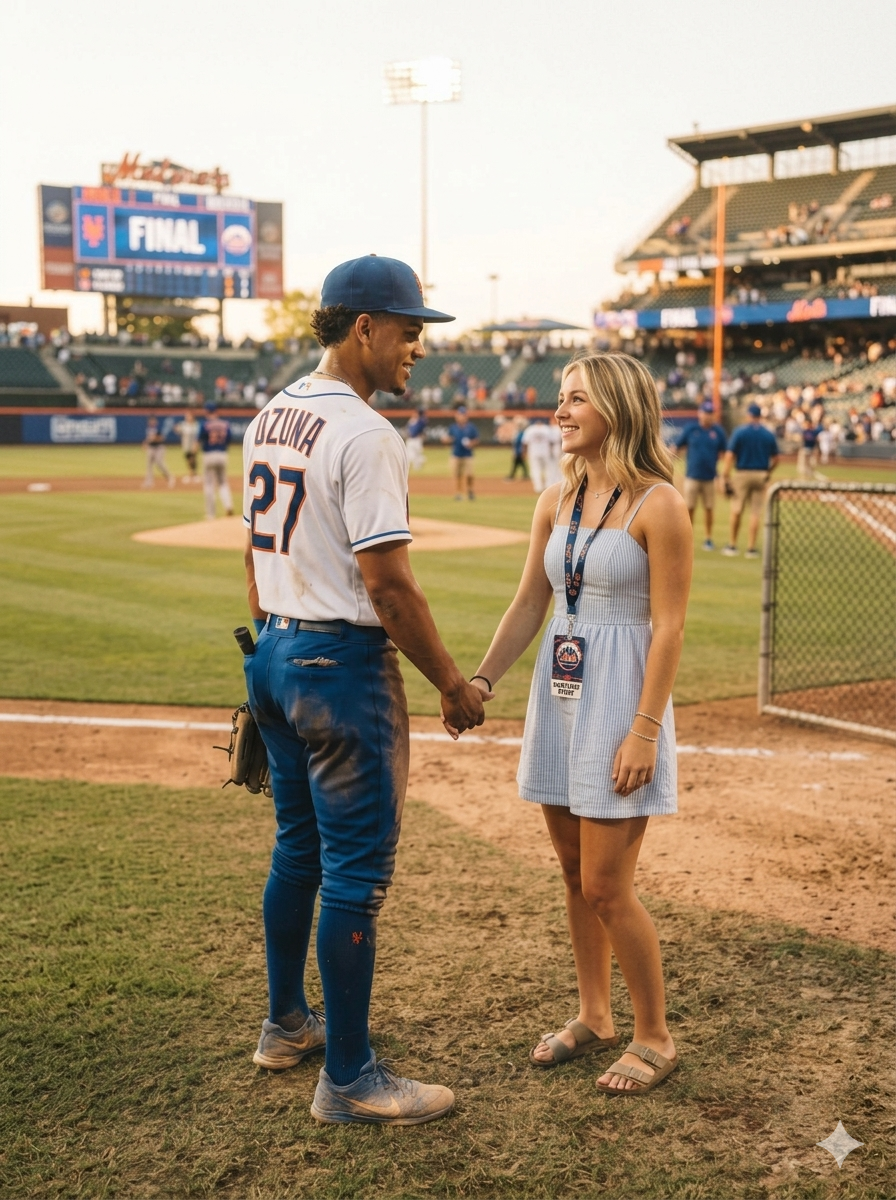
Bachata in June follows Rafael, a 19-year-old pitcher from the Dominican Republic, spending his first summer in America with a host family — and falling for the host family's daughter, Claudia, in the space between two languages and two very different futures. It's slow dances in a kitchen. It's homesickness turned into something tender. It's knowing from the start that the ending is already written — and choosing to love it anyway
Rafael Ozuna's first notice about the Wright house was the smell of freshly cut grass, distinct from the sugar cane and diesel scent of San Pedro de Macorís. His second observation was the girl on the porch steps, who looked up from her book and said in a clear, unhurried Spanish that surprised him, "You must be the one my daddy won't stop talking about. He says you throw ninety-six."
Rafael, nineteen years old and just three days off a flight that carried him from a familiar world to an unfamiliar one, stood on the lawn holding his duffel bag and looked at her. "Ninety-seven," he said in Spanish, as pride was the only English-related thing he felt confident in that afternoon, and she laughed as if he'd shared a much funnier joke than he actually had.
"Claudia," she said, standing and extending a hand like an adult although she was only twenty. "I did a mission year in Bolivia, and my Spanish is better than my Spanish teacher's, which she hates. Come on, I'll show you your room before my mother tries to feed you three dinners."
This was how it began — not with what either would now call flirting, though it was from that very first afternoon: her special way of teasing him, gently correcting his English with humor, and how he soon started listening for her footsteps on the stairs before getting out of bed, all hinting at something more.
He was in Eugene for short-season A ball, a low rung on a very long ladder, assigned to the Wrights, as the organization assigned all its young Latin American players to host families for the summer — a practical arrangement, a place to sleep and eat that wasn't a cramped apartment with four other homesick teenagers. Nobody had told him a daughter would be there, twenty years old and home for the summer before her senior year of pre-med, fluent in a language he'd assumed, until that first afternoon, no one in this town could speak.
The early weeks were difficult in ways hardly anyone back home would expect, despite his on-field success—striking out batters with his 97-mph fastball and baffling them with his wipeout slider. The real challenge wasn’t measured by metrics or radar guns; it was emotional. An emptiness stemmed from the distance, being in a foreign country with a different culture and language. Some nights, he missed his mother's sancocho so badly some nights he couldn't sleep. He struggled to understand his American teammates’ jokes in the dugout, laughing a fraction of a second late, watching their faces to know when to join. He called his mother every Sunday, pretending he was adjusting well, and she believed him, or at least pretended to, as mothers do.
Claudia noticed he wasn't eating enough at dinner, not because of the food's quality but because it wasn't his. Quietly, she asked him to teach her how to cook Dominican dishes on Tuesday nights when her parents worked late. He showed her how to make mangú, mashed plantains, just like his abuela did. She burned the red onions the first three times, making him laugh so hard he had to sit on the kitchen floor, and she gently threw a wooden spoon at him. That moment lifted a long-held tension in his chest.
"You're homesick," she said, not a question, one of those Tuesday nights, watching him salt the plantains with more care than the dish strictly required.
"Todo el tiempo," he admitted. All the time.
"Tell me about home, not the sad parts. I want to know what you'd want to show me if I ever visited," she said.
He shared stories of the colmado on his street corner, where old men played dominoes until midnight, slamming the tiles loud enough to wake the block. He described bachata, with its characteristic ache, and how it’s danced close and slow, knees sliding together. He also mentioned merengue, the lively, chaotic dance perfect for crowded rooms, sweat, and no one sitting still. One night, he played music on his phone and taught her basic steps in the Wrights' kitchen. His hand was on her waist as they laughed about how she struggled to keep the beat, and later, when she finally mastered it, they weren't really practicing dance steps anymore so much as finding reasons to stand close.
In return, she taught him English — not the formal classroom kind, but the useful, everyday language: slang from her friends, how to order coffee naturally, and the subtle difference between "I'm good" and "I'm fine," which he was surprised to learn actually depended on tone to convey different meanings. After night games, she would sit with him, reviewing his scouting reports on a legal pad, encouraging him to describe his experiences in English until he spoke fluently without translating in his mind.
By July, he was starting to think more in English regarding baseball, and mostly about her when contemplating anything else.
Neither of them openly expressed it for a long time. Instead, it was reflected in small gestures — like the ticket he saved for her at his home games, him walking her to her summer job at the clinic before his morning workouts, and his manager, an old scout who had seen many summers with host families, starting to call him "the mayor" because of his ever-increasing smile. Ultimately, Claudia, sitting on the porch in August as the season waned, said it aloud—half in Spanish, half in English, as their summer had been a blend of both languages.
"I don't want you to go," she said.
"I don't want to go either," he said, and meant it more than he'd meant anything in a long time.
But the season ended in the usual way—bus rides, flights, and a letter from the organization about instructional league and winter ball back home. There was no room for a twenty-year-old pre-med student, who still had two years of school left and ambitions just as demanding as his own. They both understood this without needing to say it: she wanted to be a doctor, one who returned to places like Bolivia, building her life around being needed somewhere distant from ballparks and spring training. Meanwhile, his career was characterized by constant movement—possibly six cities in six years—or sudden ending due to unforeseen injuries like a torn ligament.
The night before returning home, they didn't dance. Instead, they sat on the porch steps where they first spoke, he holding her hand. He told her, using the English he had learned from her all summer, that meeting her was the best thing that happened to him in a country that had scared him more than he could admit to anyone else.
"You gave me my English," he said. "I gave you bachata and merengue. I think that's a fair trade," he said softly.
"It's not a fair trade," she said, laughing even though her eyes were wet. "You gave me a lot more than bachata and merengue."
She didn’t go to the airport the next morning— they had agreed the night before that neither could bear watching the other walk through security toward a life the other wasn't in. Instead, he called her from the gate, and they spoke in Spanish, relaxed, just like she had spoken to him that first afternoon on the porch. When his flight was called, there was nothing left to say except gracias, and a silent, mutual understanding that some people stay in your life for exactly one season. This didn't make the season smaller, but rather it made it bigger — a whole year's worth of growth squeezed into three months, with both of them changed by each other in ways that would last beyond the goodbye at the gate.
He thought of her that winter, while teaching his cousin the merengue steps she'd once gotten wrong in a kitchen roughly four thousand miles away. Meanwhile, she thought of him during her anatomy lectures, in the particular cadence of Spanish she still sometimes spoke to herself, out of habit, out of missing him. Neither of them called it a mistake. Both of them, separately, called it the summer when they became who they were about to be.

The Luckiest Person I Know
Ben Tarlow is the luckiest person I know. But one day, his luck ran out as he was laid off days after his 28th birthday. As he searched for his next move, he drove out to the family lake house to clear his head and get away from the city life. Unbeknownst to him, that trip to the lake would change his life forever.
Ben Tarlow is arguably the luckiest person in the world. As a kid, he never studied for tests and still scored exceptionally well. In high school, he attended tryouts for the varsity baseball team despite never playing competitively before, and by May, he was batting cleanup and leading the district in three offensive categories. His grandmother used to shake her head at Sunday dinners, saying, "That boy could fall in a river and come out holding a fish." His father often called him "the luckiest person I know," so frequently that it no longer sounded like a compliment but rather a natural fact, like the sky being blue.
Ben never minded it because, frankly, it was true. Luck had guided him gently throughout his life, and he had learned to go with the current and just float.
But luck could only carry him so far. Three weeks after his twenty-eighth birthday, Ben was part of a massive company layoff that relieved nearly forty percent of its staff without prior warning or a golden parachute. It was just a cold-hearted Tuesday morning email and a plain brown cardboard box.
For the first time ever, luck was not on his side, so he needed time to clear his mind. Naturally, he drove to the family lake house to escape the city routine. He arrived at his family's lake house on a Friday and told his mother he needed some space and quiet to think about his situation. She understood and let him be, because she knew that luck would eventually return to Ben.
On his third night there, Ben, unable to sleep and feeling restless, headed to The Anchor, the town's oldest dive bar with its sticky floors and a jukebox that barely worked. He ordered a cold beer and sat two stools away from an older man in a rumpled button-down shirt, sleeves rolled up, with his tie long removed. The man seemed out of place — the kind of person who usually has someone else pull his chair — but he was drinking whiskey as if he were a local and a regular at The Anchor.
Ben immediately started a casual conversation to pass the time—without any serious motive. The way strangers do in small-town bars, when there's nothing to prove and no one to impress. Apparently, the old man, accustomed to people seeking favors or asking for something, was initially reserved and not very open. However, after another whiskey, he relaxed, and the conversation flowed as smoothly as the whiskey.
The man's name was Walter. Ben didn't get his last name and didn't think to ask. Walter casually mentioned that he owned a company back in the city — a legitimate, publicly traded firm, sometimes featured in the business section. He said he was ‘living the dream life’ but confessed that managing that lifestyle was starting to feel burdensome.
Walter swirled his glass and asked, "You know what my kids ask me when I call?" then explained, "Money. That's all. My wife inquires about the quarterly figure, but no one ever asks how I look," he chuckled, though there was little humor. "This town and my cabin are the only places where nobody wants anything from me, except the fish—and even they want my worms."
Ben laughed at that, and something about the sound — easy and unguarded — made Walter smile for real.
Walter invited, "Come fishing with me tomorrow. I don’t have anyone up here who simply wants to relax and fish."
“Sure, why not?” Ben replied joyfully.
“It’s done, kid. I’ll see you tomorrow morning at six by the dock. Don’t be late, the fish don’t wait for anyone,” he joked as he closed out his bill and returned to his cabin for the night.
The next morning, Ben arrived at the dock right at six o’clock, where he found Walter already preparing the boat with a cup of black coffee in his hand.
“Morning, kid,” he said joyfully, “I was starting to think you weren’t going to make it.”
“No place I’d rather be,” Ben replied with a smile.
He responded jokingly, “Don’t try to kiss my butt, you knucklehead; come here, give me a hand with the boat."
Walter's aluminum boat slowly moved away from his dock into the open water. All day, they avoided discussions about jobs, money, or luck. Instead, they talked about lures and Walter's father, who had taught him to fish on this lake fifty years ago, among other topics. They caught five trout together, and Walter insisted that Ben take the biggest one home.
"The kid who doesn't ask me for anything," Walter said, "gets the good fish."
They shook hands on the dock that afternoon, and each went their separate ways. Ben drove back to the city a few days later, his resume freshly polished, feeling — if not lucky — at least steadier than when he'd arrived at the lake house.
Three weeks went by without any job offers, and doubt began to creep back as bills accumulated and his savings decreased. A few days later, Ben was at his kitchen table, working on another cover letter on his laptop when there was a knock. At his door stood a man in a gray suit, holding a leather portfolio, with a professional and serious look.
"Benjamin Tarlow?" he asked.
"That's me," Ben replied.
"I'm an attorney representing Walter Grissom's estate," the man stated clearly, as if Ben should already know the surname—or perhaps he should have. "Mr. Grissom died two weeks ago from a heart attack, in his sleep at the lake house." He extended an envelope. "He left specific instructions for this to be delivered to you personally."
Ben's hands turned cold before he opened the envelope. Inside was a single folded note, written in hurried handwriting yet full of emotion.
To the one person I know who will actually value the lake house — not the money, not the name, just the mornings on the water. My wife will sell it the week after the funeral if I leave it to her. My kids won't even remember which lake it's on. You sat with me and didn't want a single thing from me. That's rarer than you know.
Enjoy the fish.
— Your friend, Walter
Behind the note was a cashier's check, made out to Ben for five hundred thousand dollars — earmarked, the attorney explained, for the transfer taxes and upkeep of a modest lake house that was now entirely and legally Ben's.
Ben returned to his place at the kitchen table. While he didn't cry outright, a feeling in his chest eased, like a knot finally unraveling. His mind drifted to his grandmother, the fish, the river, and all the years people called him lucky—as if luck were a gift handed down from elsewhere—good grades he never earned, victories he didn't chase.
But this was different from anything else; it was distinctly human. A stranger observing that Ben had merely arrived, desired nothing, and stayed for a while. It wasn't luck; it was he who had shown up.
He picked up his phone and called his father.
"Dad," he said, "you're not going to believe this."
For the first time, when his father laughed and said, "You really are the luckiest person I know," Ben didn't just go along with it. He smiled and thought: maybe. But this one I truly earned.
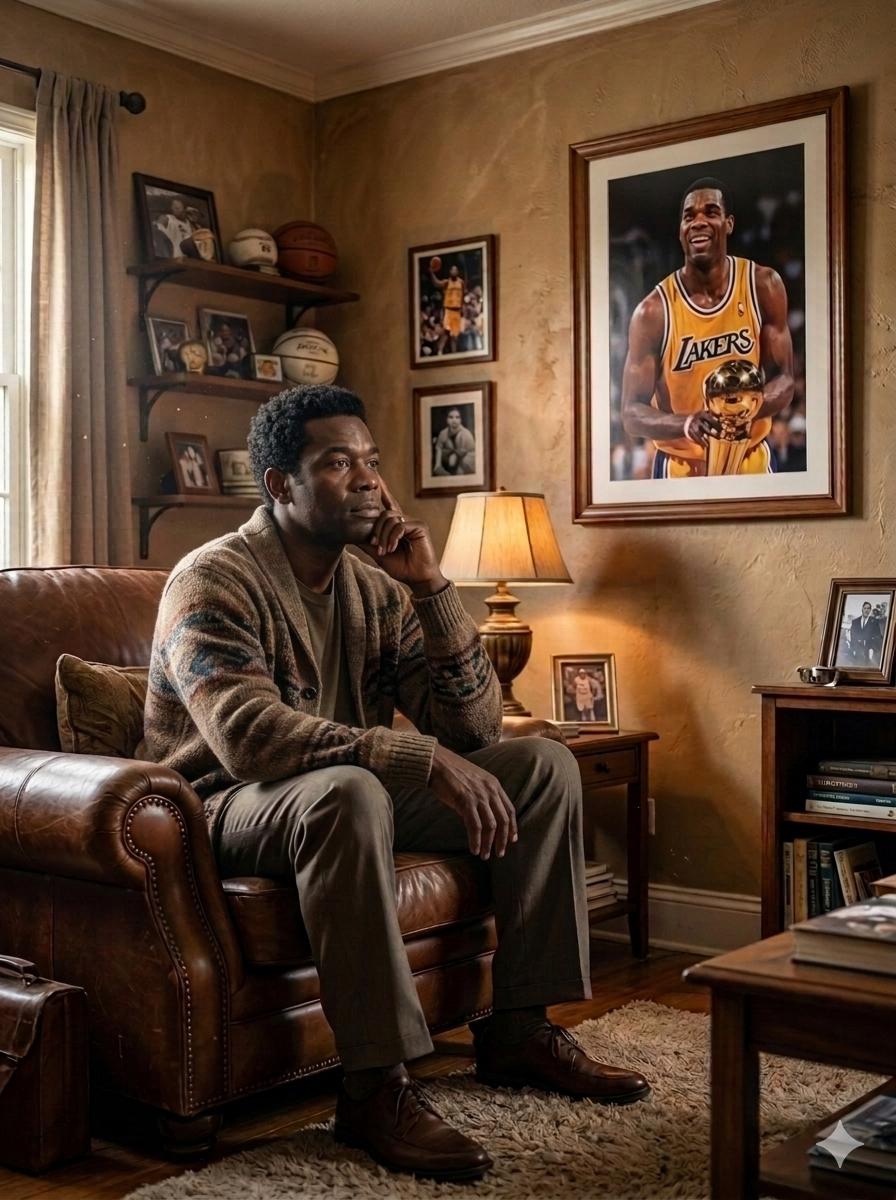
Lost Identity
Darius Holloway’s life revolved around basketball since he was 9 years old. Now, he’s sitting alone at 3 a.m., suddenly unable to recognize himself without the game.
This short story is about the identity we build around a career, a role, or a title — and the quiet reckoning that comes when it's stripped away.
The alarm clock read 3:17 a.m.
Darius Holloway sat abruptly upright in bed as if something had grabbed him by the collar — his heart pounding, sheets soaked, chest heaving in the darkness. He couldn't recall a nightmare, nor any sound out of place. It was simply the sudden, overwhelming realization of being awake and, for one long, terrible second, not knowing who he was.
He sat on the edge of the mattress, pressing both palms against his knees. The dull, familiar ache in his left knee — rebuilt twice — persisted. His right shoulder tightened as it always did when the temperature dropped. His body was a catalog of repairs: taken apart and reconstructed so often that some mornings he moved like a building that had survived too many earthquakes — still standing but no longer perfectly aligned.
Camille slept peacefully beside him, facing away with one hand under her cheek, her breathing slow and steady. He observed her for a moment, then got up, grabbed his phone, and quietly left the bedroom to prevent the screen light from waking her.
The kitchen was dimly lit except for the glow of the microwave clock. Darius reached for a glass from the cabinet, filled it with water from the sink, and drank while standing. Through the window above the faucet, the neighborhood appeared quiet and blue-black — neatly maintained lawns, two-car garages, and a street that was more expensive per square foot than anything he had ever dreamed of as a child.
He gazed into the distance, fascinated by how his skills in dribbling and shooting a basketball made this happen.
He was nine years old the first time a coach told him his talent was special.
Special transitioned into AAU circuits at eleven, then joined the varsity high school team at fourteen. By fifteen, recruiting letters piled on his mother's kitchen table as she cried, pressing her hand to her mouth. At sixteen, he received a Division I scholarship to a Power 4 conference school, a moment that felt like a door opening to a dazzling life, leaving spots in his vision. He accepted without hesitation, walking through that door without looking back, slowing down, or wondering what lay on the other side.
He never learned to ask that question, as there wasn’t time, at least in his mind. His focus was always on the next season, the next game, the next contract.
The NBA draft came after his junior year of college. Darius was picked in the middle of the first round. His mother sat in the front row in a yellow dress, and he hugged her on live television as the whole country watched. For eleven years after that, Darius Holloway was a name people said with a particular kind of weight — the weight reserved for someone who could do something with his body that other people's bodies simply wouldn't allow.
And then, incrementally, it ended.
The first serious injury was his left ACL, six years into his professional career. He'd been lying on the floor for forty seconds before the trainers reached him. He knew before they did — the sound alone told him everything. He remembered lying on the hardwood staring up at the arena lights while the crowd went quiet, thinking: get up, they're watching, get up.
But his body didn’t cooperate. In the end, he rose with the trainers' assistance and was led back to the locker room for testing.
Rehab was meant to last eight months, but Darius, surprisingly, returned in five. He shouldn’t have, since the added stress on his body only aggravated the injury by not allowing enough time to heal.
However, Darius ignored all that. His contract incentives depended on playing games, which meant having a body on the floor. To achieve this, he needed to convince team doctors that the swelling was manageable, the joint stable enough, and the pain tolerable enough to play through. Over time, he became skilled at describing his pain in ways that would facilitate getting back on the court rather than hinder it.
The right shoulder injury occurred two years later after a hard fall on an outstretched arm. The land was so impactful that the crowd's reaction was neither a cheer nor a gasp, but something in between. He played the final four minutes of the game without revealing the severity of the injury until after the final buzzer.
Standard procedure, his agent had said. Protect the body but protect the check first.
Rehab was rushed, taking only half the recommended time. He received a cortisone shot before every game and took anti-inflammatories like vitamins. While the money consistently flowed into his bank account, his body quietly kept track of the actual costs—saving up every shortcut, every week missed of proper physical therapy, and every morning he taped himself and forced himself into the gym despite his joints pleading for rest. The body didn't show the consequences immediately; instead, it waited patiently and then delivered the full bill all at once.
His final game took place on a Tuesday night in February. It wasn’t anything dramatic — no memorable moments, no standing ovation from the crowd. During a cut to the baseline, he planted his foot wrongly and felt a different kind of pain in his knee—one that felt more final than before—and he sat on the scorer's table while the team doctor knelt before him, speaking words that seemed distant, as if coming from afar.
He was thirty-four years old.
The retirement press conference had been someone else's idea. Suit, podium, a room full of reporters asking him how it felt to have had such a career. He said the right things, the cliches of gratitude, about the game giving him everything, about looking forward to the next chapter.
Honestly, he had no idea what the next chapter would be. He spoke the words because he had been media-trained since he was a teenager and the microphones and cameras were recording.
That was eight months ago. Now, he faces a continuous struggle to manage pain and adapt to living at home full-time.
To some, this may seem trivial, but for Darius, it was a full-blown identity crisis. Basketball had defined him for over twenty-five years, shaping who he was. Without basketball, Darius Holloway questioned what remained of his identity.
He moved to the living room and sat in the dark on the couch Camille selected from a showroom in Buckhead. The house was quiet in the specific way that expensive houses are quiet at night, thickly insulated — the kind of silence that seems to be waiting for something. Opposite him on the wall was a framed photo from his second season: a mid-air shot, body fully extended, the ball just leaving his fingertips at an angle the photographer captured perfectly. He once loved that photo. Recently, he'd started sitting in different chairs to avoid looking at it.
His phone displayed sixteen unread messages: an old teammate inquiring about a podcast, a sneaker company brand rep regarding an ambassador role, a third follow-up from a financial advisor, and an unknown number with a voicemail he hadn't checked.
He owed responses to everything, but he did not give any. Not maliciously, but because he simply lacked the energy.
From down the hall, he heard the soft, unconscious sounds of his children sleeping — Darius Jr., seven, who already had his father's build and was always running around, and Noelle, four, who knew every word of three picture books and repeated them at breakfast as if they were scripture. He thought about them the way he thought about the mortgage, school tuitions, and the monthly statement from the financial firm managing his remaining career earnings — with a love that was now always intertwined with a steady, low dread.
He understood his responsibilities, having been instructed in different settings by different individuals: to leverage the brand, develop the platform, shift into ownership, coaching, or media. These were clear, straightforward steps—like a ladder with visible rungs.
What the brochure didn't mention was that you needed to understand who you were before building anything on that foundation. Darius Holloway, sitting in darkness at 4 a.m., suddenly realized—and dreaded—that he had never truly discovered that identity. He had been a basketball player since he was young, long before he could clearly articulate what he wanted from life. The sport provided him with a self—a ready-made identity that only required him to show up and perform. He had dedicated twenty-five years to faithfully and fully performing that role.
The stage was now gone, leaving him standing alone in an empty theater. It was dark, still in costume, and he had no idea what his face looked like underneath it.
His knee ached. He shifted his weight, pressing his thumb against the scar tissue below his kneecap, and thought about the different versions of this conversation he might need — with a therapist, Camille, or someone who had gone through something similar and could assure him there was another side. He had only one close call, talking with a former teammate who had retired three years earlier. 'It gets weird,' the man had said, laughing before changing the subject. Darius also laughed, but he didn't understand at the time.
He understood now.
He considered calling his mother. She would answer on the second ring, no matter the time—she always had, her entire life—like she stayed half-awake just in case he needed her. Yet, he wasn't sure what he'd say. "I'm scared" seemed too plain. "I don't know who I am" felt too overwhelming. "I'm not okay" was the most honest and the hardest to believe.
Briefly, he contemplated following the dark, vice-filled route that could lead to a fatal end. He perceived no escape and thought it was the easiest choice. Many others had chosen that path. As he was considering this, he heard the gentle footsteps on the hardwood from the hallway.
He turned.
Noelle stood at the end of the hall in her pajamas decorated with stars, clutching her worn blanket and gazing at him with the calm, unreadable expression typical of four-year-olds in the middle of the night, as if she had wandered in from another world.
"Daddy," she said.
"Hey, baby." He kept his voice low. "Come here."
She moved across the room and casually climbed next to him, just like small children do, as if the couch belonged to her as well. She wrapped her blanket around her shoulders, leaned on his arm, and remained silent.
He put his hand on top of her head.
Outside, a car passed slowly down the street, its headlights sweeping across the ceiling and gone. Noelle's breathing deepened almost immediately, drifting back toward sleep with the easy confidence of someone who had never once questioned whether she was safe.
Darius stared at the photograph on the wall.
The player was twenty-three years old. Mid-air and certain. A body aligned perfectly with itself, precisely at the moment it was meant for.
He looked at his daughter's face and then he looked back at the photograph.
Something in his chest shifted — not breaking or healing, but moving gradually like tectonic plates under immense weight. He reached for his phone, looked at the screen for a while, and then, for the first time in eight months, he opened a new message. He typed a name once given by a teammate, a saved number he never used, a man known for helping others find their way after their playing days ended.
His thumb hovered hesitantly before beginning to type a message.
And somewhere in the back of the house, a door to a new chapter opened.
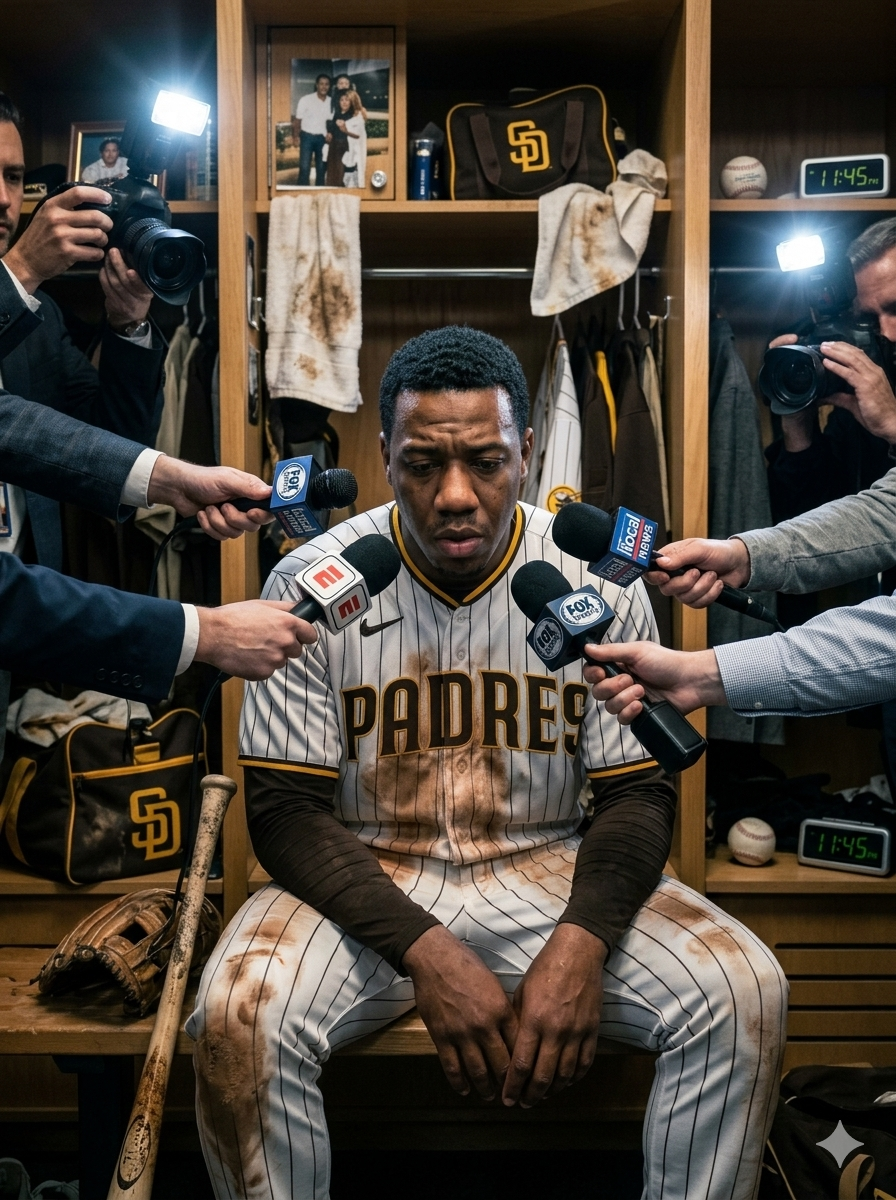
The Weight of Fame
What happens when the whole world expects you to be a star and you're falling apart inside? This gripping true story follows a rookie's silent battle with anxiety, public criticism, and self-doubt — and how he found his way back
They labeled me "The Phenom" even before I played a single Major League inning. It appeared on magazine covers, echoed in draft-night highlight reels, and was whispered by scouts who had watched me since I was sixteen. They believed, somewhere along the way, that I would be the missing piece the franchise had sought for a decade. I used to enjoy hearing it. However, I didn't realize then that such a nickname isn't a blessing but a figurative debt, and these debts often come with high expectations.
My debut was meant to be a celebration, but it turned into a moment where I realized what drowning feels like in front of forty thousand spectators. I had blazed through the minor league levels and convinced myself that it was just the same game I've played since childhood. However, I was completely mistaken.
I barely remember most of the game — just scattered moments. Like when the ball slipped from my hands during a play that I'd made a million times throughout my career. The crowd's groan wasn't angry, but disappointed, which felt even worse. My manager's face on the sideline, jaw clenched, trying to appear confident in me. I left that game feeling like the worst version of myself on the field, telling myself it was just a one-time thing. Little did I know, that night marked the start of a long learning journey.
The internet did what it tends to do. By the time I returned home that first night, my name was a trending hashtag — but not in a good way. Complete strangers, who'd never even played baseball or thrown a ball in their lives had fashioned entire personas around calling me a bust, a fraud, and useless for the franchise's future. I read every comment during that first week, almost compulsively, as if picking at a wound because some dark part of me needed to see just how bad it was. Anxiety crippled me, leading to insomnia every night. It became so severe that I flinched at my phone buzzing. After two weeks, I deactivated all my accounts—every avenue for strangers to reach into my chest and squeeze. Yet, the noise persisted; now I had to imagine it myself, which was somehow even worse.
The media was also unhelpful. After each loss, they would gather around my locker with microphones and their composed, rehearsed expressions, asking me to explain on camera, in real time, why I was failing. Questions like, "What do you think is going wrong?" or "Do you think the pressure is affecting you?" or "Some fans say you're not living up to the hype—what's your response?" I learned to respond with short, generic answers, because the alternative was revealing the truth: that I was terrified, didn't recognize myself anymore, and felt like I was walking onto a field already defeated every day. I was also losing the love for the game I had cherished since I was a kid.
My teammates, who were supposed to support me, started talking behind my back, but I overheard their words, as you do with things you're not meant to hear. They said things like, "I don't get it, man, we were told he was going to be a star," and "He's got all the tools, he's just got no head for this." I realized, in a cold, logical way, that their frustration wasn't unwarranted. We were losing, and I was meant to be the cause of that. Yet, even knowing this, every time I heard their words, it felt like something bitter was being carved out of me.
By midseason, I could no longer distinguish where the performance anxiety ended and something darker began. My hands trembled before games in a way never seen in college, driven not by adrenaline but by fear — a suffocating, all-encompassing fear of failure in front of everyone who had believed I couldn't. It felt as if an elephant was pressing on my chest every time I stepped into the batter’s box. Off the field, I lost the desire to get out of bed and stopped answering calls from friends. I would sit in my dark apartment some nights, frighteningly clear-minded, contemplating that maybe the simplest choice would be to walk away — from the sport, the reputation, and the heavy burden of trying to be someone I couldn't figure out how to be. I convinced myself that no one would blame me; in fact, they might even say I proved I was a bust and a waste of a draft pick by the organization.
I was one phone call away from telling my agent I was done when my dad called instead, like he somehow knew.
He didn't begin with sympathy; that simply wasn’t his way, his M.O. Instead, he was cold and straightforward, like an army sergeant. He asked me outright if I was considering quitting, and when I hesitated to answer quickly, he already knew the answer.
"Listen to me," he said, his voice calm and steady, like it always was whenever I truly needed support. "If you give up now, you're not really protecting yourself. You're just confirming everyone who ever doubted you right. And do you know what happens then? They forget about you. That's it. No redemption story, no comeback, just a name people mention when recalling players who couldn't handle the pressure. Cast aside and forgotten, like a broken tool.
I sat in the dark, pressing the phone tightly against my ear until it hurt, listening as he continued.
"Or," he said, "you can choose to face the storm. It will be tough and may remain difficult longer than you'd like, but in the end, you'll emerge stronger than anyone else, because no one else has had to endure what you're going through right now. That's the decision before you, son. Nobody else can make it for you. Whatever path you take — I’ll be with you. Every step of the way. I'm not going anywhere."
I didn't say much back. I doubt I could have, beyond the lump in my throat. But something within me, which had been gradually curling inward for months, straightened up that night—just a little. Not completely fixed, not fearless—just standing once more.
I wish I could say that in the very next game, I became the star everyone expected. But that’s not how it happened. It took months of quiet, difficult, and unglamorous work—therapy sessions I was ashamed to admit I needed, extra hours training with a coach who stopped merely performing confidence and started genuinely building it in me, and learning to walk back into the locker room and accept my teammates' doubts as their problem, not mine.
But I didn't give up. Sometimes, that's the only win — not in the stats or headlines, but in the fact that I kept showing up each day, just as my father said I could.
They no longer call me "The Phenom," and quite frankly I prefer it that way. The nickname once carried a heavy weight of high expectations and emotional stress that nearly ended my career. Nowadays, when people mention my rookie season, they usually just refer to it as the year I almost walked away — and then didn't.
That's the part of the story I'm most proud of.
My Emma
When my daughter Emma started dating the Yankees' rising star shortstop, I thought it was a dream come true. Then his batting average collapsed, his defense fell apart, and I found out why. I had to make an impossible choice: protect my daughter's secret, or tell the man she was destroying the truth. This is the story of the night I chose loyalty over blood
It’s incredible how much you don’t know about your daughter, especially once she reaches an age where she wants nothing to do with you. I learned that the hard way about my Emma
I've been a Yankees fan for forty-five years.
My father took me to my first game when I was six, sitting in the nosebleed seats at the old stadium, eating overpriced hot dogs and Cracker Jacks. Immediately, I fell in love with the Bronx Bombers.
I raised my daughter Emma the same way. Yankee games on summer evenings, teaching her how to keep score and explaining the rules even though she was barely tall enough to see over the seat in front of her. She wore a tiny pinstripe jersey and a cap that kept falling over her eyes. Those are some of my best memories—just me and my little girl, watching our team.
So, when Emma started dating Marcus Riviera, the Yankees' star shortstop, I should have been thrilled.
And initially, I was.
Marcus was everything you could want in a father for your daughter. He’s twenty-five years old, humble despite his success, and kind to fans. Moreover, he kept a low profile and strayed away from the limelight—something that’s almost impossible to do here in New York. He'd hit .312 last season with twenty-eight home runs and played defense like he had a magnetic glove. The back page of the Post called him "the future of the franchise."
When Emma brought him home for dinner six months ago, I nearly fainted.
"Dad, this is Marcus," she said, smiling as if I didn’t know who he was.
“Pleasure to meet you, Marcus,” I said nervously as I shook his hand.
Emma let out a slight chuckle. “He’s your biggest fan,” she said.
We talked baseball for two hours. He was gracious, answered all my fanboy questions, and even signed a ball for me without my asking. Emma glowed the whole night, happy in a way I hadn't seen since her mother died three years ago.
"He's great, isn't he, Dad?" she asked after Marcus left.
"Sweetheart," I began, "You know how much the Yanks mean to me. If you screw this up, I don’t know if I’ll be able to forgive you."
And I meant it. Emma didn’t care too much for her old man now that she was in college. Watching the Yankees provided a relief from my midlife crisis.
“I won’t daddy,” she promised as she kissed me on the cheek. And I wholeheartedly believed her.
But something changed around late May, early June.
Marcus started slumping. Not a typical cold streak, but a complete collapse. His batting average plummeted to .220. He couldn’t hit a beach ball, much less a baseball. His defense was abominable—he moved like he had cinder blocks on his feet, and his once soft hands hardened like concrete. The errors compiled, and naturally, the media started asking questions. Was he injured? Was there something going on in his personal life? Did the Yankees need to consider other options at shortstop?
Marcus was the pre-season favorite to start at this year’s All-Star Game, but now he wasn’t even ranked among the top 10 shortstops in the league.
I watched every game, keeping score like I always did, and I saw it: the split-second hesitation before each at-bat, the lack of focus in the field, the way he stared into the dugout between innings like his mind was somewhere else entirely.
"He's distracted," I told my buddy Mike during our usual Tuesday night at O'Malley's bar. "Something's eating at him."
"You think it's Emma?" Mike asked, knowing about the relationship.
"I sure hope not. I warned her not to mess with him," I responded sternly.
"Just saying, man. The timing is suspicious. He meets your daughter, and suddenly he can't hit water even if he fell off a boat."
I dismissed it. Emma wouldn't do anything to hurt Marcus. She cared about him. Plus, she assured me that she loved him. Or at least I thought she did. But then I saw the text messages.
It was an accident. That's what I keep telling myself.
Emma had left her phone on the kitchen counter before falling asleep on the couch. It buzzed once, then again, then a third time. I wasn't trying to snoop; I was just going to silence it so it wouldn't disturb her slumber.
But the preview on the lock screen showed a message from someone named "Chris ❤️":
Can't wait to see you tonight. Told Sarah I'm working late again.
My stomach dropped. I stood there, dumbfounded, phone in hand, knowing I shouldn't look further but unable to stop myself. I swiped up, and because Emma's security settings were loose—she used her birthday as the passcode, same as always—I was in.
The messages with Chris were two months old. Flirty at first, then explicit. Photos, plans to meet at hotels. Discussions about how to keep it secret from "M"—Marcus.
He's so clingy lately, Emma had written a week ago. Always asking where I am, who I'm with. It's exhausting.
Just break up with him, Chris had responded.
I can't yet. The perks are too good. Free game tickets, meeting celebrities, and attention. Plus, Dad would kill me.
I felt sick.
My daughter, my Emma, whom I had raised to be honest and kind, was cheating on Marcus Riviera and using him for the lifestyle while sneaking around with some finance bro. And the worst part? She was staying with Marcus partly because she didn't want to disappoint me.
I put the phone back on the kitchen counter and stormed out of the apartment.
That night, the Yankees were playing the Red Sox.
I sat in my usual spot at O'Malley's, watching Marcus strike out three times. Each time he walked back to the dugout, his shoulders slumped a little lower. The camera caught him once, staring at nothing, and I recognized that look.
He knew. Maybe not the details, but he knew something was wrong.
"He's a mess," Mike said. "What's going on with this guy?"
I wanted to tell him. Wanted to explain that Marcus wasn't distracted by contract negotiations or injuries or pressure. He was distracted because my daughter was destroying him from the inside out, and he could feel it even if he didn't have proof.
"I don't know," I lied.
The Yankees lost 7-2. Marcus made two costly errors. The post-game interview was brutal—reporters bombarded him with questions about whether he needed time off, whether he was considering counseling, and whether the pressure was too much.
"I'm fine," Marcus said, but his eyes were hollow. "Just working through some things."
I went home and found Emma on the couch, scrolling through her phone and smiling at something.
"Hey, Dad! Did you watch the game? Marcus was terrible again. I feel so bad for him."
The casualness of it—the lack of guilt, the easy lie—made my hands shake.
“Yeah, wait, how come you didn’t go to the game?” I asked with a puzzled look.
Emma shrugged. “Marcus didn’t want me there. By the way, he's coming over tomorrow. Says he needs to talk about something important." Emma looked worried, but not guilty. Not ashamed. Just worried about being caught.
To me, she was unrecognizable.
"That right?" I muttered. "I hope everything's okay. He's been so weird lately."
I went to bed that night and didn't sleep. Just stared at the ceiling, thinking about the little girl in the Yankees jersey and the woman she'd become. Thinking about Marcus, who'd done nothing wrong except fall for someone who didn't deserve him. Thinking about my team, watching their star player crumble because of my daughter. I felt disgusted, guilty, and above all, disappointed.
The next morning, I made a decision.
I called Marcus. The Yankees had an off day, so he picked up on the third ring.
"Mr. Patterson?" Marcus sounded surprised. "Is everything okay? Is Emma.."
"Emma's fine. I need to talk to you. Not about her. But rather about you and your performance," I said firmly.
There was a long pause. "Okay. When?" he asked.
"Today. Before you come see Emma. It's important," I urged.
We met at a diner in New Jersey, far from anywhere we might be recognized together. Marcus looked exhausted, with dark circles under his eyes, the kind of tired that comes from the soul, not the body.
"I know this is weird," I started. "But I'm a fan first, and I've been watching you struggle."
"Everyone's been watching me struggle," Marcus said with a bitter smile. "The whole city thinks I'm washed up at twenty-five."
"You're not washed up. You're distracted," I replied.
"Yeah." He looked down at his coffee. "I am."
"By Emma?" I asked.
His head snapped up. "How did you—"
"Father's intuition. And I've been around long enough to recognize when a player is being eaten alive by something they can't talk about." I paused, weighing my words carefully. "You think she's cheating on you."
It wasn't a question.
Marcus's expression crumbled. "I don't have proof. But yeah. I think so. The late nights, the vague excuses, the way she's always on her phone but won't tell me who she's texting. I feel crazy, like I'm being paranoid, but—"
"You're not paranoid," I interrupted sharply.
"You can't know that. You're her father," he shot back.
The silence that followed was deafening.
This was it. The moment I had to choose: loyalty to my daughter, whom I'd raised, loved, and would die for; or loyalty to... what? A baseball team? A player I hardly knew? The integrity of the game I had loved my whole life.
No. It wasn't about the team or the game.
It was about the kind of man I wanted to be. The kind of father who taught his daughter accountability by modeling it himself.
"I saw the messages, Marcus," I said calmly.
"What?" His voice was barely a whisper.
"I wasn't snooping," I said. "But I saw enough. She's seeing someone named Chris. Has been for at least two months."
Marcus closed his eyes. When he opened them, they were wet.
"Thank you," he said quietly. "For telling me because you didn't have to."
"Yeah, I did. Because you're a good guy, and you deserve better. And because my team needs you to get your head straight," I smiled. "In that order."
"Does Emma know you know?" he questioned.
"No," I responded.
"Are you going to tell her you told me?" he inquired.
That was the question, wasn't it? I could tell Marcus and stay anonymous, let him handle it however he wanted. Emma would never know I'd betrayed her confidence. We could maintain our relationship, pretend I didn't know what kind of person she'd become.
Or I could be honest. Tell her what I'd done and why. Force her to confront the consequences of her actions with the one person she claimed to care about, disappointing.
"I don't know yet," I admitted.
Marcus nodded slowly. "I'm going to break up with her today. When I come over. I was already planning to—I couldn't keep doing this, feeling like I'm going crazy. But now I know for sure."
"She'll be upset."
"She'll get over it. Probably already has someone lined up," he stated sharply. The bitterness in his voice was cutting.
We sat in silence for a moment.
"Mr. Patterson? Can I ask you something?" he said, breaking the silence.
"Sure," I muttered.
"Why did you tell me? Really? Your daughter's going to hate you when she finds out," he declared.
Before answering, I thought about Emma at six years old, learning to keep score. At twelve, crying when the Yankees lost the playoffs. At sixteen, arguing with me about trades and stats. At twenty-three, bringing home a man she claimed to love while secretly destroying him.
"Because she needs to learn that actions have consequences," I said. "And because I've been teaching her about loyalty her whole life. It’s time that I show her what that really means," I stated firmly.
Our meeting ended shortly afterward. I shook his hand and left. Marcus broke up with Emma that night. She was jaded but not devastated. As Marcus predicted, she had another man already lined up. But that one left her shortly afterward.
I never told Emma that I met with Marcus. And frankly, I prefer it that way. Yes, I chose a team over my daughter, but I wouldn’t be able to forgive myself had I kept silent and she destroyed his career. Marcus resurged into stardom and led the Yankees to a World Series championship. And you’ll never guess who witnessed it all from his personal suite…
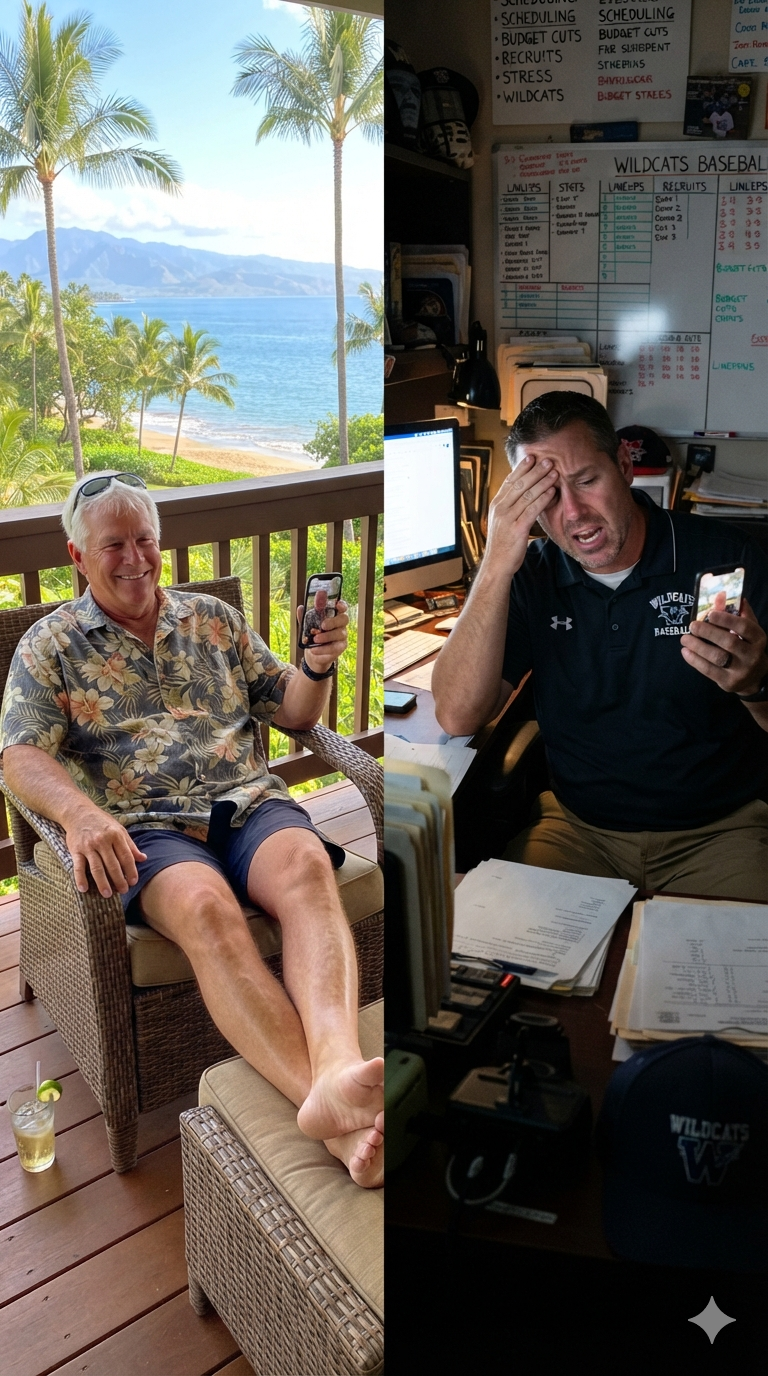
Stupid Games
Some ambition doesn't want to build — it wants to take. Meet Dale Pritchard: 15 years as an assistant coach, watching someone else get the glory. So he built a quiet, methodical scheme to frame his boss for embezzlement and take his job. It worked… for a while.
"Play Stupid Games" is a short story about betrayal, guilt, and the kind of karma that shows up uninvited.
There is a particular kind of ambition that doesn't lead to creation but to destruction. It lingers in the background, observing what others have built and scheming not to match their achievements but to dismantle them and take the remnants as its own.
Dale Pritchard had that kind of ambition.
He had spent fifteen years standing just behind Coach Raymond Ellis at Hargrove High School, holding clipboards, running drills, and attending parent meetings where he smiled and deferred, saying, "Coach Ellis has a great plan for your son." Meanwhile, something bitter and persistent grew deeper in his chest with each passing season. He was forty-one, with a family, a mortgage, a shelf of coaching certifications, and a slowly solidifying belief that he deserved more than his current role.
The problem: Coach Raymond Ellis.
Coach Ellis had spent twenty-five years at Hargrove, developing one of the state's most respected athletic programs. It attracted college and professional scouts regularly, and parents moved into the district mainly to access his program. He had five state championships, 15 district titles, 10 regional championships, five coach-of-the-year awards, and a deep loyalty that protected him from replacement, making any discussions about his departure virtually unthinkable.
He was sixty-one years old, healthy, and had given no indication that he planned to retire anytime soon.
Dale had done the calculations multiple times, in various scenarios, always reaching the same conclusion: unless circumstances changed, he would remain an assistant coach until age fifty-five. By then, the chance would have slipped so entirely that it would only be visible in the rearview mirror of a life spent in second place.
He was not willing to accept that.
The idea didn't come fully developed at first. It gradually took shape, much like many poor ideas do — a fragment of thought here, a justification there. One late night, with a drink in his hand and a spreadsheet of the program's finances open on his laptop, he reflected on it. Since he handled travel logistics and equipment as part of his responsibilities, he had both the access and the chance, especially when he looked at the screen one February evening.
At first, he told himself he was only looking; then he told himself he was only thinking; then he started moving numbers.
It was detailed work, and Dale, despite his moral flaws, was methodical. He realized that accusations lacking structure were merely noise. What he required was a clear framework — a paper trail that presented a compelling, damaging story with Ellis's name clearly at its core.
Over four months, he carefully transferred small amounts between program accounts, always below the review threshold and timed to coincide with Ellis's approval of larger expenses such as equipment or travel. He set up a secondary vendor account, a shell supplier for equipment that was only on paper, and made sure this paper trail led back through two layers of records to a personal account he opened under a name similar to Ellis's, creating confusion and a plausible link.
He set his plan in motion, said nothing, and waited.
In June, he made an anonymous call to the district's financial compliance office.
The six-week investigation concluded with a sense of grim efficiency, as if it already knew its findings—since the evidence was deliberately structured to confirm its expectations. Forensic accountants tracked the transfers, identified the vendor account, and linked it to a personal account. Over three years, they uncovered what seemed to be systematic, small-scale embezzlement amounting to just under forty thousand dollars.
Coach Ellis sat in front of the board of directors on a Tuesday morning in August, gazing at the faces of people he had known for decades. He felt a distinct, suffocating bewilderment—a man witnessing a reality he does not recognize being presented to him with authoritative language.
"I didn't do this," he claimed, because he didn't know what else to say and the truth felt like it should be sufficient. But every time he spoke, he felt as though he were beginning to understand, in real time, that it was not going to be.
Dale sat three seats away from the conference table, his face showing a mixture of reluctance and sorrow — the look of a man troubled by what the evidence had uncovered about someone he respected.
Ellis glanced at him once during the meeting. An old animal instinct stirred in him — a gut feeling that comes below reasoning — but there was no clear sign to support it. The board's evidence was convincing and substantial, making his instinct seem unfounded.
The parents attended the next meeting in large numbers. Some had known Ellis for fifteen years, while others had sent two children through his program. The vote of no confidence was not unanimous but was decisive enough for the board to move forward.
The negotiation spanned three weeks, with criminal charges fluctuating—initially on the table, then off, and later partially reintroduced. It ultimately concluded with an agreement negotiated by Ellis's attorney, who pragmatically recognized that innocence does not always equate to proof. The outcome included no criminal charges, restitution of forty thousand dollars from his retirement account, and an immediate resignation publicly presented as early retirement.
He signed the papers on a Thursday afternoon and drove home alone. He sat in his driveway for twenty minutes before going inside.
The first month was the worst.
It wasn't about the money, although losing a major part of his retirement hurt quite sharply. It wasn't even about the program, despite thinking about the kids every day. It was the name — how twenty-five years of effort had been reinterpreted, in institutional memory, as the tenure of someone who had eventually stolen from the program he had built. He couldn't change that record because he had no evidence to clear his name.
He also could not shake the feeling that Dale was somehow involved in this fiasco.
It appeared to him at strange times—during cooking, sitting on the back porch, or attempting sleep. It wasn't quite anger, as anger needs something to push against, and he had nothing. Instead, it was the quiet, relentless certainty of a man whose instincts, honed over forty years of reading people, had rarely been mistaken. He reflected on it from various perspectives, but it stayed the same: an emotion lacking a lever, a suspicion without a device.
His therapist told him he needed to accept what he could not change. His wife told him the same thing, more gently, on more evenings than he could count.
Eventually, somewhere around the third month, something shifted.
It started with small changes. A fishing trip he had delayed for ten years. An astronomy course at the local college, which he was always curious about but never had the time for. Lazy mornings with coffee and no pressing commitments — experiencing time as something abundant rather than constantly interrupted by obligations. In three months, he read more than he had in the past three years. He prepared intricate dinners for his wife during weekdays, meals that took two hours and involved mastering new techniques.
In November, they went to Portugal for two weeks. In January, New Zealand.
He was unhappy about what had happened to him and didn't feel grateful. However, to his surprise, he was starting to realize that life beyond what was taken from him was broader than he had expected. He had become so deeply associated with the role of Coach Ellis that he no longer noticed how much the role had subtly overshadowed other aspects of his awareness.
He thought less about Dale and more about planning a trip to Hawaii.
Meanwhile, Dale Pritchard took over as head coach in September. In a statement to the local paper, he used the phrase "redirect and steady the ship" and emphasized honoring the program's legacy while introducing a new vision.
The first month was manageable.
The second month revealed to him the entire structure Raymond Ellis had spent twenty-five years building and maintaining—the numerous unseen systems that held the program together. Dale had previously observed these from a position that, he now realizes, protected him from their full impact. These included parent communication, booster club politics, scheduling negotiations with rival teams, fundraising cycles, relationships with college recruiters requiring ongoing attention, equipment vendor contracts, and the relentless task of managing over 50 student-athletes along with their family dynamics.
He had watched Ellis do it for fifteen years, and it had looked like management. Now, inside it, it felt like drowning in slow motion.
The parents, who had mourned Ellis's departure to different extents, attended Dale's first booster meeting with cautious skepticism—willing to be persuaded but not eager to advocate themselves. By the second meeting, their reserve had softened. By the third, two of the most prominent booster families had asked to meet with the athletic director to express their concerns about the program's direction, which they diplomatically described as "concerns about program direction."
On the field, results softened. Not catastrophically — not in the first season—but it reflected a pattern where programs start to weaken when the leader hasn't yet established the full weight the role demands. Mostly small issues: recruiting relationships Ellis had cultivated quietly over the years didn't seamlessly transfer to Dale. A junior, who might have remained loyal under different circumstances, transferred in February. The staff, who had been loyal to Ellis in ways Dale hadn't fully recognized, were cooperative professionally but maintained personal distance, which worsened daily.
He went home tired in ways he hadn't known were possible.
His wife noticed and pointed it out. He brushed it off with a smile, insisting he was fine, then returned to his home office to fixate on logistics that he couldn't quite organize.
In the dark, he occasionally thought about Raymond Ellis—not with guilt, which would have demanded a more honest reflection than he was prepared for. Instead, he was more aware of the unsettling fact that what he had taken was significantly more than he initially realized.
On a late Wednesday night in March, more than a glass and a half past when judgment kicks in fully, Dale picked up his phone.
He convinced himself he was merely checking something, then scrolled to the contact, and pressed call before his more cautious mind could object.
The phone rang four times. Then:
"Hello?" Ellis's voice, calm and steady in a way Dale didn't recall, sounding like a man confident in his own life—unhurried, with nothing urgent behind it.
Dale swallowed. "It's Dale." A pause. "Pritchard."
He heard a deafening patient silence on the other end.
"I—" He paused and collected himself. "Look, I'm not going to — I just want to say that this job is..." He exhaled deeply. "I bit off more than I could handle. The whole thing. I didn't fully understand what—" He paused again. The silence on the line was very quiet. "Are you willing to come back?"
A long moment passed.
When Ellis spoke, his tone was calm and steady, while Dale in the background could pick up the faint sounds of a warm location — perhaps wind or the muffled noise of the ocean.
"Pritchard, when you play stupid games," Ellis said, "you win stupid prizes."
Then he hung up.
Dale stared at his phone for a long time after the call ended, the screen going dark in his hand.
In Hawaii, Ellis placed his phone face-down on the table next to his chair, picked up his Mai Tai, and watched as the evening light slowly faded and melted into the Pacific. The drink was perfectly cold and sweet.
He no longer thought about Hargrove High School.
He observed the ocean for some time, then went inside and slept peacefully, like a man who has accepted what he cannot change and has deliberately chosen to live well regardless.
Flagrant Betrayal
Colby Bryan was the best guard in the conference. Maya Reeves was his ride-or-die girlfriend — courtside every game, by his side every night. But behind the "perfect couple" headlines was a secret deal, a bag of cash, and a betrayal so calculated it makes your skin crawl.
The buzzer rang, and the crowd erupted. Colby Bryan scored thirty-one points in Westfield University's home game and led his Crestwood team to victory once again. Following an All-American sophomore season, the junior guard continued his strong play, prompting many analysts to hail him as the top guard in the conference.
What the analysts didn't talk about on their highlight reels was Maya.
Maya Reeves, a junior, Pre-law major at Westfield University. She sat courtside at rival games with a perfect smile and cheered just quietly enough that no one noticed she was cheering for the wrong team. Except Colby noticed, which is precisely how they met freshman year. Maya’s boldness and defiance captivated Colby, and they had been inseparable ever since.
They kept their relationship private initially to avoid unwanted attention. However, as a star like Colby, maintaining privacy became challenging, and soon almost everyone on both campuses knew that his girlfriend attended Westfield. To many, their love story resembled a romantic film. For Colby, it was the best thing that ever happened to him.
Or so he thought.
The week before the rivalry game, Crestwood's assistant coach sent a text to the team group chat: Big week. Eyes focused. No distractions.
Colby understood the routine; the Westfield game wasn't just another game— it held special significance for the coaches. A defeat could threaten their jobs, so they would do everything in their power to prevent it.
But Colby didn't consider Maya a distraction; if anything, he considered her his secret weapon. She gave him a sense of purpose outside of the court, a breath of fresh air. Moreover, she was his most loyal supporter, attending or watching every game on the live stream. At times, he couldn’t imagine a life without Maya.
While Colby was playing the lover-boy role, he was unaware of what Maya was planning at Westfield.
It all began in a Westfield group chat that Maya kept from Colby. A booster, known for wearing the school colors even to his wedding, had made a tempting offer. He claimed it wasn’t meant to hurt anyone, but rather to 'set the tone’ and scare the kid—Colby—possibly to stop him from playing, an ‘accident’ per se.
His motivations? Westfield hadn't defeated Crestwood in four years, and he had bet heavily on Westfield winning. However, Bryan's participation could change that, and he wasn’t willing to leave the outcome to luck.
Maya reviewed the messages and the offered amount—sufficient to cover part of law school and a vacation. Reflecting on it, she realized she was the sole person close enough to Colby to take advantage of the situation. Driven by greed, she chose to accept the offer—after all, she was going to become a lawyer, and with her looks, she could easily win over wealthy lawyers at a prestigious firm. Colby would just be a minor part of her college story, a casualty in her pursuit of success.
She had responded: I can make sure he's at Barley & Main Thursday night. But I need at least 70 percent up front.
To which the booster responded: Consider it done.
That night, Maya heard a knock on her door. As it was late, she hesitated to open it, fearing it might be an attempted break-in. She looked outside using her door camera and saw a black leather bag with a note beside the door. After waiting a few more minutes to check if it was a trap, she quickly opened the door and grabbed the bag. It was unexpectedly heavy, and she had to prop it on her kitchen table using both hands and her knee.
Attached to the bag was a note that read: “As promised, now it’s your turn.”
Maya unzipped the bag, her eyes widening in surprise as she saw stacks of neatly packed bills inside. She spent the night counting the money and, once satisfied, devised a plan.
She knew that Colby wouldn’t budge at the idea of going out just before the rivalry game, so she began to subtly groom him by claiming that she was feeling alone, overwhelmed, stressed, and unlike herself. Being the good boyfriend, Colby offered to be there for her.
To which she would say, “Shouldn’t you be getting ready for your rivalry game this week, babe?”
“You’re my priority right now, babe; that’s just a game. It can wait,” he would reply.
By that time, Maya realized she had him completely under her control. She would cuddle with him first, before becoming intimate, to help lower his defenses. Afterward, she casually said she was planning to go out with some classmates to Barley & Main on Thursday night and didn’t want to go alone. With a charming smile, she convinced the usually disciplined Colby to accompany her.
That night after Colby left, she texted the booster: He’s coming.
Booster: Good, does he suspect a thing?
To which she responded: Not at all.
Booster: Good, keep it that way.
The plan was straightforward: the booster would recruit some guys to hit on Maya at Barley & Main, aiming to make her uncomfortable. Colby would then step in to ‘defend her honor.’ Afterwards, they planned to outnumber Colby and give him a brief beating to ensure he couldn't play the next day.
On Thursday night, Maya dressed enticingly, highlighting her figure enough to draw attention. Once at Barley & Main, they followed their plan flawlessly. The guys took turns flirting with Maya, and she played her part as a damsel in distress perfectly. However, they didn’t factor in Colby’s patience. Each time a guy approached Maya, he remained calm and unmoved. Eventually, the situation escalated as they pushed the limits, walking a thin line between harassment and flirtatious banter. That’s when Colby intervened.
The guys believed they could easily overwhelm him with their numerical advantage, but Colby proved to be an experienced fighter. He quickly dodged their attacks and gradually took down each member. Noticing her plan was falling apart, Maya 'accidentally' tripped Colby, giving the group an opportunity to attack him.
Colby was discovered in the alley behind Barley & Main at 1:47 a.m. on Friday—just a few minutes after the bar closed. He was unconscious and bleeding profusely. The suspects had already fled.
Maya took pictures and sent them to the booster. Done, she texted.
She played the distressed girlfriend role convincingly and reassured an unconscious Colby that she would go get help, when in fact she went to collect the remaining money from the booster.
That’s when she called an ambulance. Once the paramedics arrived, they quickly strapped him in and sped off to the hospital.
By three in the morning, the doctors were talking about swelling, about pressure, about a medically induced coma as the safest option to let his brain rest.
Colby’s mother, Denise Bryan, who was planning to surprise her son at the game, sped through the night to find him unconscious in a hospital bed. His best friend and roommate, Jaylen Camden, was already in the waiting room when she arrived — red-eyed.
He sobbed once he saw Mrs. Bryan. “I begged him not to go, but he wouldn’t listen, ma’am; this is my fault,” he cried.
“Don’t blame yourself, honey; Colby is a grown man. He made a terrible decision,” she said consolingly.
Maya arrived an hour after that, tearful, hugging Denise, saying she couldn't believe it, saying she was so scared, saying she loved him.
Jaylen watched her as his jaw tightened, but he said nothing. Something didn’t sit right about Maya, and he was determined to get to the bottom of it.
The next day, he discovered the truth.
He had stepped into the hallway to get coffee from the machine near the family lounge when he caught her voice around the corner — low and sharp, the way people talk when they think no one is listening. He took out his phone and began recording.
The game had been suspended, and the booster began to demand his money back from Maya. But she wouldn’t back down, claiming he didn’t honor his part of the deal:
"You were supposed to scare him. That was the deal. You scare him, he sits out the game, it's done. You put him in a coma? Do you understand what you've done? If he doesn't wake up—"
A pause.
"Don't call me again until you've figured out how to fix this. And if anyone asks, you don't know me."
Jaylen stood with his paper coffee cup and did not move for a long moment. Then, quietly, he returned his phone to his pocket and walked slowly back toward the corner. She was still on the phone, her back to him.
He waited until she'd gone back to Colby's room before he found her in the hallway alone. He kept his voice calm. He told her what he'd heard. He told her he had the recording.
Maya looked at him as someone weighing which persona to present, ultimately opting for the confrontational one.
"I don't know what you think you heard," she said. "But you need to be very careful, Jaylen. Very careful. Because I will make your life incredibly difficult if you push this," she threatened.
"I have it recorded," he replied firmly.
"Then you recorded nothing," she said, and walked away.
Colby woke up on a Saturday.
The first thing he noticed was a water-stained ceiling tile, and the second was Maya, holding his hand and crying with what seemed like relief.
He tried to speak but couldn't. She shushed him and said he needed to rest. He squeezed her hand, and she squeezed back. For a few hours, the room was quiet and warm, and everything felt, against all odds, survivable.
Later that evening, after Maya had stepped out, Jaylen visited him and made a firm decision. Having attempted to confront her and then to wait, he realized Colby needed to understand Maya’s true nature. He sat beside the bed, leaned in, and shared everything with his best friend.
The room changed.
Colby's face displayed a progression from confusion to disbelief, finally resembling a man watching the floor give way beneath him. As he attempted to sit up, the monitors abruptly spiked. A nurse arrived within moments, followed by another nurse and then a doctor—while Colby, visibly distressed, was speaking rapidly, clutching the bed rail with both hands, insisting she wouldn't do that, she wouldn't—he had to be sedated to prevent the shock from worsening and complicating the doctors' stabilization efforts.
After waking up from the sedatives, Jaylen was not in the room, but Maya was there.
She spoke softly and steadily. Sitting beside him, she took his hand again and, with teary eyes, calmly explained that while he was unconscious, Jaylen had tried to sleep with her. She hadn't told him earlier because she was protecting him and didn’t want to cause him distress.
"I didn't know how to say it," she said. "I didn't want this to be the first thing you heard when you woke up," she cooed.
Colby stared at the ceiling for a long time.
When Jaylen texted, he didn't answer. When Jaylen called, he had Maya decline it. By the end of the day, he had sent one message: Don't come back here.
He lay in the hospital bed and felt a grief that had nothing to do with the assault — a clean, cutting loss, the kind that comes when you believe you've discovered who someone actually is.
Meanwhile, Maya sat there proudly, admiring the divide she had created between the two friends.
Three days later, his mother came in alone.
She kissed his forehead, pulled the chair close, and asked him how he was feeling. He said he was okay. She asked about Maya. He looked toward the window.
“She's been amazing, Mom, through everything. She's been here every day, even though she could have left. I know there's been talk about us — the rivalry, all of it — but this showed me her true character. I'm proud of her,” he replied.
His mother looked at him for a moment. Her face was composed and still, the way it got when she had already made a decision and was only deciding on the timing.
"Baby," she said.
She reached into her bag and pulled out her phone, turning the screen toward him. It displayed a news article from a local outlet, published that morning, featuring Maya Reeves's name in the headline and the phrase 'taken into custody.'
His mother said, "She's been arrested. The men who attacked you betrayed her. The police have a recording of a phone call she made from this hospital — there's also another one."
She put the phone down on the bed and pressed play.
Jaylen's recording. Ninety-four seconds. Maya's voice, clipped and furious: You were supposed to scare him. That was the deal.
The room was eerily quiet.
Colby did not move. He listened to the whole thing — every word — and when it ended, he was still looking at the phone, and his mother gently reached over and turned the screen face down on the bed rail.
"That's the love of your life, honey," she said.
She leaned forward and kissed him on the forehead, soft and sure.
"Rest easy."

Coach Stewart
After 25 years, Coach Dan Stewart retired the way he coached — with heart. His team just lost the State Championship on a walk-off homer. No ring. No banner. But as he stood on that field for the last time, he reminded everyone why he got into coaching in the first place: not trophies… but people.
It was the State Championship game, and Coach Dan Stewart’s Spartans lost a hard-fought battle against their long-time nemesis, Coach Ramsey’s Knights, in the bottom of the seventh inning on a walk-off home run--- a gut-wrenching way to end his tenure as Spartans’ head coach.
After twenty-five years at the helm, Coach Stewart was retiring, effective immediately, citing age, health, and a desire to spend more time with his family.
The Spartans walked off the field, mostly with their heads down to hide tears rolling down their faces. They knew Stewart had never won a state title and wanted to send their long-time coach off as a state champion. Ultimately, they felt like their season was an utter failure.
Coach Stewart stood in front of the visitors’ dugout, hugging and consoling his players as they walked back in to gather their gear and pick up their trash. Win or lose, Stewart always emphasized the importance of leaving the dugout ‘better than you found it.’ A superstitious guy at heart, he believed the ‘baseball gods’ would reward you with a bloop hit or diving play if the dugout was practically spotless after the game—one of many ‘Stewartisms,’ as his players often called them.
Once the Spartans cleaned their dugout, Stewart summoned his team to the first base foul line for the banner presentations.
“Sportsmanship, gentlemen, shake hands and smile for the camera, savor this moment,” he stated.
Upon the completion of the postgame ceremony, the state tournament director took the microphone and made a special announcement.
“Ladies and gentlemen, after 25 years, Coach Dan Stewart will be stepping down as the Spartans’ head coach. Dan has been an outstanding leader, mentor, and part of our baseball community, and we will miss seeing him on the field. Please join me in congratulating Coach Stewart on a legendary career!” he yelled.
The crowd roared as Coach Stewart faced the stands and tipped his hat in appreciation.
“Dan, my friend, come here and say a few parting words,” he commanded.
Overwhelmed with emotion, Coach Stewart attempted to wave him off, but he finally caved as his long-time friend persisted.
“Wow, those are the loudest cheers I’ve ever received at this field,” he chuckled. “Normally, I’m received with jeers and boos.”
Post-game speeches were Coach Stewart’s ‘bread and butter’ as they were always fluid and packed with a coaching tip, a life lesson, or a punchline. But today, he had to compose himself before speaking.
“I was going to save this for the bus ride home, but I guess I’ll air it out right now,” he began.
“Before this game, a reporter asked me if I would consider this season a disappointment if we lost, since that would mean retiring without a state title. I quickly dismissed that idea, saying I didn’t start coaching to win trophies or gather honors because, at the end of the day, banners, rings, and trophies collect dust and sometimes get thrown away. I began coaching to serve; to give back to the baseball community. The reporter looked at me like I had two heads, I kid you not. So, I went on to explain what I’m about to share with you tonight. For the past 25 years, I have never won a state title, but I have coached more Division 1 athletes and first-round draft picks than anyone in the state. I might not be a state champion, but I have mentored valedictorians, entrepreneurs, CEOs, and top government officials. Yes, you could argue that I wasn’t a good coach because my teams couldn’t win a championship, and frankly, I don’t blame you. If I were in your shoes, I’d probably say the same. But that was never my ultimate goal. My goal was to ensure my players were prepared to succeed beyond high school baseball, whether in sports, academics, or any other pursuit they chose. Every year, after the last out, I thank my players and my staff for their hard work, and after the seniors walk across the stage for graduation, I hug them and tell them that nothing would make me happier than to see them succeed in life—and I genuinely mean it. I always invite them back for homecoming as I host a baseball alumni party. For twenty-five years, I have done that, and every year the group gets bigger. Since this was my final year, we rented roughly two large hotel conference rooms because thousands of people showed up. They showed up with their families and reminisced about my ‘Stewartisms’ and their high school days. Further, I’m proud to say I have never had to beg alumni for donations, because they give generously. We have one of the nation's greatest facilities, thanks to them. Moreover, they always say thank you not just for being their coach, but also for being a second father and for encouraging them to succeed in life. They know they can always count on me, and vice versa. Many still call, text, or email me to talk or ask for advice. So, while my legacy may not be of a state championship, today I consider myself the greatest coach in the nation because I accomplished my goal of preparing my players for success in life. Because ultimately, I judge myself by how successful my players are post-graduation and how many are willing to return for homecoming. To the current parents, players, and staff, thank you for entrusting me with your player’s development and for your hard work and dedication. Without you, this season wouldn’t have been possible. To Garrett (Coach Ramsey), you S.O.B, thank you for pushing and challenging me to be the best coach I could be. Not only were you a great competitor and rival, but an excellent coach and human being. With that, I bid farewell to you all. Thank you; it has been an honor to serve the baseball community for the past 25 years,” he stated as he handed the microphone back to the state director.
In a quarter-century, Coach Stewart never won a state title, but as he walked off the field for the final time in his coaching career, he felt like a winner nonetheless.
Fixed
Elliot Valentino was a 4.3 GPA student nobody noticed — until Chase Dozier, Hargrove High's untouchable golden-boy quarterback, punched him in a hallway for something he didn't even do.
What Chase didn't know? Elliot had spent five years quietly training in Brazilian jiu-jitsu.
What his dad told him that night wasn't comforting. It was a warning: "Fix it. Or I will make it worse."
I want to be clear about something before I tell you what happened.
I am not sorry.
My name is Elliot Valentino, and I have a 4.3 GPA, a regional science olympiad medal, and a subscription to three academic journals I actually read. I build mechanical keyboards as a hobby and I can explain the Krebs cycle from memory. I am seventeen years old, measure at about six-foot-two inches, and I weigh a hundred and seventy pounds. For the first two and a half years of high school, I was essentially furniture.
Not exactly bullied. Not initially. Furniture isn't bullied — it’s just moved around, sat on sometimes, and ignored. I lived in the 'negative space' of Hargrove High School's social scene — present but unnoticed, functional yet invisible.
That changed when Chase Dozier, the starting quarterback, noticed me.
Chase Dozier was more than just a quarterback. I want to be clear about this because I think accuracy is important, and it seems to have been lost by many in my town when it comes to him.
Dozier was a five-star recruit, the highest possible rating for an amateur prospect. He committed to Alabama after his junior year, a decision marked by calls from ESPN-featured coaches, features in state sports magazines, and a signing ceremony in the gym, which the principal attended as if it were a graduation. He stood six-foot-three, weighed two hundred and fifteen pounds, and had a spiral that the local paper notably compared, without irony, to a rifle shot.
He was untouchable. I mean that in every sense.
Teachers gently called on him, while administrators ignored the situation. I observed Mr. Briggs, who had thrown a sophomore for a dress code violation, say nothing when Chase arrived twenty minutes late to AP Economics for the third week in a row. Coach Jones intervened to arrange a schedule that didn't disrupt practice. Ms. Patel, the guidance counselor, who preached zero tolerance yet rarely enforced it, laughed at his jokes in the hallway.
He moved through the school like weather moves through a place. You adapted to him. You did not hold him accountable. Hargrove High was his kingdom, and he made sure everyone knew.
I understood this. I was a scientist about it, almost. I observed the phenomenon with the detachment of someone studying a thing they have no intention of touching.
Then he started harassing me. It began subtly, as these things usually do. It's the kind of high school bullying you often see in movies and sitcoms.
A shoulder bump in the hallway—seemingly accidental, but the smile afterward suggested otherwise. My lunch tray was knocked over twice, each time witnessed by enough people that it turned into a story he could share rather than an accident he committed. My locker combination was written on the hallway whiteboard in handwriting I recognized from the one time Chase had borrowed a pen in class.
I documented everything, which might seem odd, but my methodical nature drives me. I kept notes in a private file on my phone, including dates, descriptions, and witnesses. I told myself I was documenting it in case I needed to report it, but I suspect I knew even then that reporting would be futile. Most likely, the report would be ignored, and I would be blamed for causing trouble for Chase.
I once told my mother briefly, using the understated language I often do. She advised me to stay away from him and wait, mentioning that boys like that tend to peak early. She spoke kindly, and while she wasn't entirely wrong, she missed the core issue. The real problem wasn't Chase’s future but the immediate six feet of hallway right in front of us.
Now, what almost everyone at Hargrove didn’t know was that I had been training in Brazilian jiu-jitsu three nights a week since I was thirteen.
My father signed me up not for sport but for self-defense. A quiet man with few words and clear expectations, he saw my twelve-year-old self—slight, bookish, and socially awkward, preferring books over talking—and took me to a gym on Route 9 without explanation. He spoke briefly with the instructor for about four minutes, then sat quietly on a plastic chair by the wall, watching the entire first session.
He never made me go because it was never necessary. I loved it instantly, just as much as I loved chemistry and mechanical systems — fundamentally, it was a physics challenge. Leverage, angle, and timing. A hundred and seventy pounds, when applied correctly, can control two hundred fifteen with mathematical precision.
I had been practicing for five years and occasionally competed quietly at regional tournaments that no classmates or teachers knew about. I held a blue belt, aiming for purple, and I kept it to myself.
Anyway, I digress. But again, I like to document with precision, or at least to the best of my ability.
The punch happened on a Thursday in October, two weeks before the state playoff opener.
I was at my locker after sixth period when Chase showed up with his two receivers, Jared and Tracy, who just seemed to follow him around and laugh on command. I was taking out my AP Chemistry textbook and avoided looking at them, maintaining the deliberate neutrality I'd adopted to get through the situation.
"Valentino," Chase said. The way he said names — like he was doing them a favor by knowing them.
Immediately, I looked up.
"You told Briggs I was copying off you on the midterm."
I hadn't. I didn’t mention anything to anyone. I noticed him copying, but I shifted my paper and continued taking my test because I was not interested in that particular conflict.
"I didn't," I said.
"You're a bad liar, man," he said casually, like someone speaking without fear of consequences.
I went back to my locker and ignored him, but he didn’t take that action too kindly. One simply doesn’t ignore the king in his own castle.
What happened next was not telegraphed. He was fast — I'll give him that — genuinely fast — and he turned me with a swift motion, landing a punch that caught me on the left cheekbone before I'd fully processed it was coming. Not a full swing, more of a short, compact hook. Enough to snap my head sideways. Enough to put color in my face.
Jared and Tracy went quiet the way people do when something has crossed a line they didn't know existed.
Chase walked away, avoiding any consequences, and went to AP Economics. Meanwhile, I was in the training room with an ice pack on my face, my head ringing constantly. I was clearly concussed, but no one asked what happened or who caused it. They knew, oh, they knew. But it was just easier to look the other way.
I returned home bearing an unexplained bruise. My father was in the kitchen as I entered. He's a man who observes much but speaks little about it. However, he noticed this bruise instantly, and his expression changed—something I couldn't precisely describe then. Now, I would describe it as a very controlled, very cold form of anger.
He asked me what happened, and I responded with a hint of shame. At that moment, I felt as though I had let him down.
He was quiet for a moment.
"Fix it," he said. "Or I will make it worse."
I understood what he meant, and he knew I understood. He wasn't the type to over-explain. His message was: deal with this on your own using the tools I provided, and do so in a definitive way. His concern wasn't about me but about the situation — he would interfere in a more obvious, less precise, and potentially more permanent.
I did not want that. So, I assured him that I would handle it.
And that I did. The following Wednesday afternoon, in the parking lot behind the gymnasium, where the team gathered after practice to find their cars. I know it sounds like I planned this, and I can assure you that I did. I am methodical by nature, and a clearly defined objective.
Chase emerged alone, as the others had filtered out ahead. Dressed in his practice gear, he was distracted by his phone, walking with his head down and eyes on the screen. His behavior resembled someone unfamiliar with needing to watch his surroundings, as things had always accommodated him.
"Chase," I said firmly.
He looked up, considering who was speaking to him and why I might be doing so. His expression shifted from confusion to contempt.
“I told you I didn't share anything with Mr. Briggs, yet you still hit me,” I kept my tone calm. “Please don't do that again.”
He gazed at me for a while before laughing — a brief, sincere laugh that lacked any cruelty. Cruelty demands effort, and he had already deemed me unworthy of it.
"Go home, Valentino," he muttered.
He moved closer to me — or perhaps he was trying to pass by, I can't be completely sure — and he placed his hand on my shoulder with the casual physical dominance of someone who had been the biggest person in every room for four years.
I won't go into detailed description because it wasn't dramatic or cinematic. Jiu-jitsu, at its essence, is quiet, close-range, and quick. I had control of his arm on my shoulder, moved inside his reach, and we hit the ground in roughly a second and a half. He was genuinely strong — strong enough to thrash — but his frantic movement was typical of untrained individuals, and such thrashing usually invites submissions rather than helps escape them.
I had his right arm isolated.
"Stop," I ordered.
He didn't, a costly mistake.
The shoulder tore at the rotator cuff. I recognized the sound immediately. I had heard it during competitions, but I had never caused it myself. He produced a noise unlike anything I'd heard from him before in the hallway, and his body shifted from struggling to suddenly still.
I released him, stood up and stared at him.
He was lying on the asphalt, gazing at the sky. His face showed the distinct blankness of someone whose nervous system has taken over all other functions.
I calmly picked up my bag, walked to my car, and drove home.
When I arrived, I looked at my dad straight in the eye and said, “I fixed it.”
He looked at me, nodded in approval, and went back to reading his newspaper.
What followed was a specific kind of chaos that I had predicted with reasonable accuracy.
The shoulder injury involved a torn labrum and a partial rotator cuff tear that required surgery and months of rehabilitation. Consequently, he lost his scholarship to Alabama and was unable to participate in the state playoffs. Without Dozier at quarterback, the team struggled mightily, and they lost in the first round, an event detailed by the local paper as a civic tragedy.
The school changed. There is no better way to describe it. It shifted suddenly, like a weather pattern, with the intensity of people who have turned their grief into a force they can control. Teachers who had previously ignored me now looked at me with nearly intimidating coldness. Students I never spoke to also had opinions about me. Someone spray-painted something on my locker, which a custodian cleaned up without saying anything, indicating where the custodian's sympathies lay.
The official investigation found that a fight took place and both sides shared responsibility. While this conclusion was legally convenient and somewhat strained by facts, Chase's father was a lawyer, my family had a clean record, and only the resolution was documented—no formal adjudication occurred. I was given a one-week suspension, whereas Chase suffered a torn labrum, ending his senior season.
There was talk of civil action, but it didn't proceed.
During my suspension, I read three papers on joint biomechanics, started a literature review for my AP Research project, and continued improving my kimura lock. If anything, it served as a vacation.
Now, here’s my take on the whole situation.
I believe Chase Dozier hit me because he never faced consequences for physical actions against someone he saw as less than him. Over four years, I think he learned that his athletic ability gave him a special set of rules—rules that applied differently to him than to others like me. Teachers, coaches, administrators, parents, students, and local journalists all, perhaps unknowingly, helped build a world where Chase was not fully recognized as a person. Instead, they made him a symbol first and a human second, and symbols don't need to follow the same rules.
I reflect on how many saw the bruise on my face and said nothing. I consider the silent calculations they might have made — that his future was worth more than my appearance, that his scholarship was a clearer loss than my safety. I think of Mr. Briggs, Ms. Patel, and Coach Jones, all of whom were good people by most standards, yet each contributed, through small acts of accommodation, to reinforcing his untouchability.
I reflect on how people can become blinded—not necessarily out of malice, but because of the story they embody, such as the hometown hero or the talented individual you can point to and say we made that. The more someone seems exceptional at what a community values, the less they need to excel at the qualities most people are expected to have. This is a simple, age-old dynamic.
He struck me because he believed he could avoid responsibility. I stopped him because my father showed me how to hold people like Chase accountable.
I don't regret the outcomes. I regret the causes, which were never truly mine. The real cause was a gymnasium filled with people who cheered during a signing ceremony for a seventeen-year-old boy and then went home, never questioning what that boy had learned about who the rules truly applied to.
The shoulder surgery reportedly went well. He will now focus on rehabilitation, aiming for a comeback. Whether he can fully recover to play Division 1 football remains uncertain. In any case, life goes on as usual.
I completed my AP Research project, earning second place at the state level, and graduated with honors.
And for the record, I still am not sorry.
The Card
"Call me tonight, not tomorrow." That's what the stranger said twenty minutes before Daniel's wedding. He didn't call for eleven days. By then, it was almost too late. Daniel doesn’t know it yet, but his marriage just became the focal point of a police investigation.
The cream-colored business card was heavier than expected and appeared in Daniel Romero's hand sometime between the string quartet finishing "Canon in D" and his mother crying into a cocktail napkin. He didn't recall taking it, only remembering Warren Iskin — his father's old law school friend, a widower with a gray mustache and a calm presence that quieted rooms without him needing to speak.
"Congratulations," Warren said, shaking Daniel's hand in that specific manner where a second item was pressed into the palm alongside the handshake. "Call me tonight, not tomorrow. Tonight," he emphasized firmly.
"Warren, I'm getting married in twenty minutes," Daniel replied.
Warren's eyes briefly darted, almost unconsciously, toward the far end of the garden where Elena, dressed in white among bridesmaids, was laughing in the late afternoon light. "That's exactly why it must be tonight."
Daniel slipped the card into his jacket pocket and later convinced himself he had forgotten about it, similar to how people tell themselves they've forgotten an unpaid bill. Forty minutes later, as the wedding ran behind schedule, he walked down the aisle and married Elena Villareal beneath an arch of white peonies. Throughout the reception, the card rested against his chest like a small, flat stone—present but unexamined.
He didn't call that night. Instead, he and Elena took a flight to Portofino the next morning, and for eleven days, Warren Iskin was completely off his mind. His thoughts focused on the vivid blue of the water beneath their hotel balcony, Elena's full-body laughter as she tipped back carefree, and the fact that, after four months together, he still couldn't quite believe his good fortune — that a woman who seemed to know exactly who she was, who moved through the world with such fluent confidence, had chosen someone as ordinary as him.
At twenty-six, he worked quietly and competently in his family's commercial real estate business, avoiding the spotlight. He had a trust from his grandmother that he seldom considered, and had a habit of blindly trusting others. His mother called this trait sweet, while his older brother saw it as naive and a liability. About ten months ago, he met Elena at a charity gala — she mentioned coming with a friend in finance, though Daniel never met the friend nor confirmed this. Elena was thirty-one, originally from California, and had been many places since, a phrase she used with a practiced lightness that Daniel naively interpreted as worldliness.
On the twelfth day, he finally called Warren from the hotel bathroom, with the shower running so Elena wouldn't hear him over the water.
"You're back," Warren said without bothering to say hello.
"We got back yesterday. Warren, what is this about? You scared the hell out of my mother saying you needed to talk to me," he said in a concerned tone.
"Sit down, Daniel," he replied firmly.
"I'm sitting," Daniel fired back.
I want you to know I’m not enjoying this call. Your father was a close friend of mine for thirty years, and I promised him before he passed that I would look out for you as he would have. That’s why I’m telling you this myself instead of leaving it to other people,” he informed.
Daniel felt something cold settle low in his stomach, a physical sensation, almost embarrassingly literal. "Handle what?" he asked.
"Your wife's name isn't Elena Villareal. It's one of eleven names I know about, and there are probably more I don't know. Eight years ago, she was Caroline Ashford, married to a man named Peter Whitlow in Savannah. Nine months into the marriage, Whitlow signed over half of his stake in his family's shipping company to a joint account, and six weeks later, he was gone. Not dead — gone. No body, no note, no trace. His family spent four hundred thousand dollars on investigators and found nothing but a rental car abandoned outside Jacksonville, with his wallet still in the glovebox and no fingerprints anywhere in it but his own, which had been wiped everywhere else."
Daniel remained silent, gazing blankly at the marble floor while the shower continued running behind him. The white noise suddenly seemed to mask something else—something inside the apartment, something lurking.
I know of at least four additional cases. One involves a cardiologist in Denver; another is an heir to a Miami hotel chain, who was missing for six months before his family assumed he had left the country. There's also a man from Austin, whose case is the only one where a body was eventually found— eighteen months later, in a reservoir 200 miles from his home. In each case, there was a marriage, followed by movement, restructuring, and liquidation of assets shortly after the wedding. The disappearances tend to occur after the honeymoon, once the spouse has learned what's worth taking and how it's secured.
"This is insane," Daniel said, hearing his voice sound thin and unconvincing even to himself. "Elena isn't — Warren, I would know. I've spent nearly a year with her. You can't fake that. No one can keep that up for a year."
"She doesn't fake everything," Warren said softly, and there was something almost gentle in how he said it, which was more unsettling than coldness. "That's what nobody realizes until it's too late. Some of what she shows you is probably genuine. That's how she's managed to stay one step ahead of every investigator who's come close. She's not acting from a script. For a time, she truly appears to love you — then something in her shifts, and she transforms completely, in a different city, with another man, leaving nothing of the woman you first knew behind."
Daniel sat on the edge of the bathtub, the marble cold even through his linen pants, and stared at a spot on the tile floor without seeing it.
"The police have been building a case for six years," Warren continued. "Financial crimes task force, three states, coordinating quietly because every time they've gotten close before, she's felt it — some instinct, some warning — and vanished before they could move. This time is different. This time, nobody knew about the wedding until it was already happening, which means, for the first time, she doesn't know they're watching. But that only holds if you don't tip her off. If you act as if nothing has changed after hearing this information."
Daniel's voice trembled as he replied, "You want me to just — live with her. Knowing this.”
"I want you to help them catch her before she disappears with everything your grandmother left you and you become case number six. There's a woman named Detective Marisol Ferro. She's been on this longer than anyone. She's going to call you tomorrow, and when she does, I need you to listen to her, the way you're listening to me right now," he instructed firmly.
Daniel gazed at himself in the mirror across the small bathroom — a man he barely recognized, pale under the yellow light, married just eleven days, standing amidst the remnants of something still unfolding.
"Warren," he said quietly. "What do I do when I leave this bathroom?"
"You smile," Warren said. "And you don't let her see anything else. Not yet."
Detective Marisol Ferro was smaller than Daniel expected and spoke with precise, carefully chosen words, as if selecting each one for maximum effect. They met at a coffee shop eleven blocks from his apartment—a place Elena had never mentioned or visited—at 7 a.m. on a Tuesday, while Elena thought he was at a breakfast meeting with a client.
Ferro said, sliding a folder across the table without opening it, "I'll tell you what I need from you, and then explain why it's important that you don't ask questions I can't answer now."
"Okay," Daniel replied.
“Her true name, as confirmed, is Renata Kovac. She has a Hungarian father and an American mother, growing up mainly in Zurich and Miami. She's truly intelligent—more than just charming—which explains why this has taken us six years. She researches her targets extensively before making contact, discovering their insecurities and desires, and then becomes exactly that. Our impression is that with you, it was her need for stability, family, and someone who would choose her and stay committed—something different from her past in her previous lives.”
Daniel rotated his coffee cup slightly on the saucer without taking a sip. "So, none of it was real," he said, sounding disappointed.
Ferro's expression didn't exactly soften, but there was a hint of acknowledgment that the question was fair. "I've examined the case files of her five previous marriages. In each, there are periods — sometimes lasting weeks or months — when, based on all behavioral signs, she truly believed what she was saying. That isn't meant to comfort you, Mr. Romero, but to warn you. It indicates you can't fully trust your perceptions of her, because even she might not always be aware of which version of herself is present in the room."
"What do you need me to do?" he asked.
“For now, there's nothing specific. Focus on living your life and going to work. Allow her to make her plans—she'll likely start within the next month, following her usual pattern. First, she will focus on financial restructuring. Expect her to suggest consolidating accounts, ask about your grandmother's trust, or casually mention estate planning in a loving manner that seems innocent. When that occurs, it's crucial that you agree to everything and inform me right away. We need her to transfer money into traceable accounts so we can monitor and freeze it as soon as she attempts to withdraw,” she commanded.
"And the annulment?" he asked.
Filed quietly and sealed, the order takes effect immediately upon our arrest—not earlier. Filing now might alert her; women like her have a knack for sensing these shifts, a feeling for when the atmosphere changes. We only have one shot at this," she warned.
It took Elena or Renata five weeks to mention his grandmother's trust. She did so on a slow Sunday morning, over homemade eggs, in a gentle tone. If Daniel hadn’t listened to Warren and Detective Ferro, he might have believed she loved him. She spoke about "protecting what mattered" and "keeping nothing between them" with such ease that it made his chest ache, even as a colder part of him observed her, cataloging, as Ferro had taught him.
He agreed instantly and arranged a meeting with a financial advisor recommended by Elena. Ferro's team discreetly identified this advisor within forty-eight hours as someone who had helped liquidate assets in at least two of Renata Kovac's previous marriages. Funds started transferring—first into a joint holding account, then, three weeks later, into an offshore account that federal authorities traced in two days and froze in one hour.
The arrest happened on a Thursday at 6 a.m., while Elena stood in their kitchen in a robe, coffee in hand, with three federal agents and Ferro at the door. Daniel had been told to be at his office by then, a detail Ferro insisted on more for him than for the operation. He didn't see her taken. He only got the call afterward, standing in a hallway outside a conference room, listening to Ferro's flat, careful voice tell him it was done, that a passport with a sixth identity had been found sewn into the lining of her suitcase, and that she had said almost nothing except, at one point, quietly, to no one in particular: "I actually liked this one."
The annulment was finalized nine days later. Daniel skipped the arraignment, choosing instead to remain in Warren's office, seated in the same leather chair he had as a boy, while his father and Warren discussed business he couldn't grasp. As he sat there, he turned a cream-colored card between his fingers, now softened at the edges from five weeks of handling.
"You saved my life," he said finally.
"I gave you information," Warren said. "You're the one who did something with it. That's not nothing, Daniel. Most people, faced with a story like this on their wedding day, choose not to believe it because believing it costs too much. You believed it. That took more than most people have."
Daniel nodded, though he wasn't sure yet what he believed about anything — about the eleven days in Portofino, about the woman who had made eggs on a Sunday morning with such convincing tenderness, about whether any part of what he'd felt had been reciprocated, even briefly, before it curdled into whatever she needed it to become.
He stood up, shook Warren’s hand, and thanked him one last time before walking out of his office.
He kept Warren’s card as a memento. Years later, he would still occasionally find it in drawers, coat pockets, or the false bottom of a box where he stored things he didn't want to discard or confront. He saw it as evidence that the worst event of his life had also, in some way, saved him — arriving in his hand just twenty minutes before it would have been too late.

Mario’s Cucina
His fiancée left when he had no money to his name. Now he cooks for athletes and celebrities all across the country. Inevitably, his ex wants him back, but will Mario take her back after all of these years?
Mario, a young, struggling, aspiring chef, wants to open his own Italian restaurant, but steep student loan debt has left him in serious financial trouble. To make ends meet, he would work at a restaurant and take on any other part-time gigs. His fiancée, Ivanna, a recent grad nurse, was becoming desperate. Eventually, her friends and family convinced her to dump him and find herself “a man of status” that she deserved.
Naturally, Mario was distraught and heartbroken. Ivanna was the love of his life. They had been dating for six years. To cope with the loss, Mario turned to vices, which quickly drained his modest bank account. Eventually, after failing to pay three months’ rent, Mario was evicted from his apartment.
To add insult to injury, Mario lost his job at the restaurant and had no choice but to move back in with his parents. The vices continued to plague Mario, and his parents gave him an ultimatum: get rid of your vices, get your life right, or get out of this house.
That was the wake-up call Mario so desperately needed. He joined a rehab community and found another job at a local mom-and-pop restaurant. The pay wasn’t great, but it was a start. To make up for the low wages, he worked as a food delivery driver.
Meanwhile, he would obsessively watch endless YouTube vids on Italian cuisine in his spare time. After months of hard work and a bit of help from his parents, Mario began catering Italian food. He started with small family gatherings of about 15 to 25 people. With time, a little social media magic, and word-of-mouth recommendations, Mario’s business became popular and began catering to celebrities and athletes across the country.
As destiny would have it, Mario would meet Ivanna again, but this time his circumstances had changed. He was no longer the struggling aspiring chef but a prominent figure in the food industry. In fact, many people considered him a celebrity.
A famous athlete and loyal customer had undergone a successful surgery to repair a potentially career-ending injury at the hospital where Ivanna worked. He wanted to show his appreciation by having Mario cater food to the hospital staff.
“Wow, look at you, you’re living your dream!” she exclaimed as Mario and his staff were setting up in the break room. “Yes, I am Ivanna,” he replied confidently. “I can see that you are too,” he added. “Yeah, but I’m no celebrity like you,” she teased. “True,” he replied blankly. “Hey, can we talk?” Ivanna asked. “Not at the moment, I’m serving,” Mario responded. “Yeah, okay. Maybe after?” she asked hopefully. “Sure,” Mario replied drily before returning to work.
The spread was spectacular. Mario and his team brought carpaccio, their signature Seafood Tagliolini, Bistecca alla Fiorentina, and Rigatoni Carbonara. Meanwhile, dessert consisted of Tiramisu and Cannolis. Naturally, the staff was fascinated by the food and asked to take pictures with Mario, to which he happily obliged.
Afterward, Mario and his crew packed up, but before leaving, they headed out to the small balcony that overlooks the city to enjoy the views with a glass of wine. Ivanna joined Mario on the balcony. “Beautiful view, isn’t it?” she says in an effort to break the ice. “I could look out at the city all night.” Mario wasn’t in the mood for small talk. After all, Ivanna broke his heart and left abruptly. So, he made sure Ivanna got the message. He turned his body towards her, leaving Ivanna feeling small by comparison to his vast, imposing frame. He spoke in a firm tone, “Ivanna, for years I dreamed about this moment. How you would come back into my arms and apologize, and I would forgive you. As time passed, however, I realized your decision was final, and my love for you turned into rage,” he continued. “I spiraled, and you didn’t care how it affected me, and now that I am successful, you want to walk back into my life as if nothing happened?”
“I messed up, Mario. I made an impulsive decision,” she cried. “Look, I’ve been thinking about the past and all the great memories, and now seeing you living out your dream, it made me fall in love with you again. I want to start over, as friends,” she added as she gently took his hand. “What do you say?”
“You had your chance, Ivanna, and I’m not interested in giving you a second chance. I’m not in the charity business,” he responded sternly. “Because since you left, I was able to invest in myself and my business. Had you stayed, I wouldn’t be the person I am today.”
“Well, you’re welcome!” Ivanna said, trying to lighten the mood. Mario scoffed. “You know what the sad part is, Ivanna? I loved you wholeheartedly, even though I didn’t have much. I would have given everything for you. But clearly that wasn’t enough. Now look at you! Crawling back pathetically after your little fantasy didn’t work out. You don’t love me, and you sure as shit don’t respect me. All you want is to leech off of me. Please do me a favor and never talk to me again!” he yelled. He gathered his crew and belongings and headed out towards the parking lot.
Ivanna was startled, but she wasn’t about to give up that easily. She followed Mario to the parking lot. “Mario, give me 5 min. I didn’t come to beg and don’t expect you to forgive me; all I wanted to say was that I feel horrible and empty for having left you,” she cried. “Sure, you do,” Mario replied while rolling his eyes. Ivanna proceeded, “I know that I abandoned you and I don’t deserve your forgiveness, but I just wanted you to know that I’m proud of you.” “
“Thank you, I’m proud of myself too,” Mario replied coldly. “Now, get out of my way, you’ve done it before, so you already know how.” And he sped off.
Beyond the Game of Baseball
The phone rang at 11:33 p.m. Coach Ellison knew nobody called that late unless something had gone terribly wrong. His star player had snuck out and gone into a crash. Now he has a choice: ruin his career or coach him.
"Beyond the Game of Baseball" is a story about mentorship, second chances, and what it really means to show up — even when no one's watching.
The phone rang at 11:33 p.m. Coach Mark Ellison stared at the screen before answering—the local sheriff’s department. An eerie feeling suddenly engulfed Ellison as adrenaline surged through his body. Nobody calls this late unless something has gone terribly wrong. He had learned that from over twenty seasons of high school baseball.
“This is Coach Ellison,” he said in a firm tone.
“Coach… It’s Officer Ramirez with the county sheriff’s department. We have one of your players here. Jason Miller.”
Mark closed his eyes as his heart sank. He immediately assumed the worst.
Jason Miller. Starting shortstop. Junior. Fast hands, faster mouth, good kid with a habit of hanging with the wrong crowd and hiding the truth.
“There’s been an accident,” Ramirez continued. “Single-car. No fatalities. Minor injuries. But his parents think he’s staying over at a teammate’s house. He asked if we could call you.”
The silence on the other end felt heavier than the words. He collected himself before replying:
“I’ll be there,” Mark said. “Where are you?”
“Mile Marker 8,” Ramirez replied before hanging up.
Mark hastily threw on some clothes and raced down to his car. As he sped through the town, thoughts of frustration and anxiety raced through his head.
“Of course, Miller would be the one to test his luck at that spot, doggonit,” he muttered as he angrily punched the steering wheel of his Chevy truck.
Mile Marker 8, known locally as Geronimo, was the most dangerous stretch of the county road. Mainly because deer and, occasionally, elk would risk crossing at night, running across the road without warning, forcing drivers to swerve and causing multiple accidents.
At the beginning of the season, Mark warned his upperclassmen about Mile Marker 8, as he had himself suffered a few bruises while trying to avoid hitting wildlife.
The crash site was still lit up when Mark arrived—the red and blue lights from the sheriff’s siren illuminated the trees. Jason’s silver sedan sat crooked against a guardrail; its front end folded like an accordion.
Jason sat on the back of an ambulance, a blanket over his shoulders, a thin line of dried blood above his eyebrow. He looked petrified.
When he saw Coach, his face crumpled.
“I’m sorry,” Jason said immediately. “I didn’t know who else to call.”
Mark didn’t yell. He never did in moments like this. Experience had taught him that. Yelling would only make things worse. He just nodded and stood in front of him.
“Anyone else hurt?” Mark asked.
“No, sir. I swerved. Deer, I think. It just came out of nowhere. I wasn’t speeding. I swear,” Jason cried.
Mark believed him. Mostly. But he knew Jason had a habit of bending the truth to escape trouble.
“What were you doing out here, Jason?” he asked.
Jason swallowed. “I told my parents I was at Ethan’s. But I got bored, so we went for a drive. We were… we were just driving. Music was loud. It was dark, and when I tried to react, it was too late.”
Mark sighed and looked at the car. He’d seen this before— teenage boys who thought consequences were something that happened to other people and would blatantly ignore the warnings of adults.
Part of him was relieved that Jason, his star player, was alive. But the coach in him was seething in anger and disappointment.
How is he supposed to cover for Jason when college coaches and professional scouts ask about his injury? More importantly, how is he going to handle Jason’s parents?
“You understand this isn’t just about baseball,” Mark said quietly.
Jason nodded; tears filled his eyes. “Yes, sir,” he replied.
Officer Ramirez released Jason into Mark’s care. The plan was simple: Ellison would take him home and help explain things to his parents. No press, no police report. Like it never happened. This was only possible because Ramirez was an alumnus of Coach Ellison’s program.
“Thanks, Ram, I owe you one,” Mark stated.
“Kids will be kids. I was once in his shoes, remember?” he asked.
“How could I forget?” Mark chuckled. “Be safe, Ram.”
The truck ride was quiet at first as Jason leaned his head against the window, staring out into the night.
“I don’t know what I’m going to tell them,” Jason said finally.
“The truth,” Mark replied. “Own your mistake, son.”
Jason picked at the blanket. “You ever lie to your parents?” he asked.
Mark laughed softly. “More times than I should have. Why do you think I share that Geronimo story every year?”
Jason glanced over. “Did… did it ever stop you from lying again?” he questioned.
Mark thought for a moment. “No. Because I had a strict father. But no matter what I did, he would always show up for me,” he continued, “that’s why I always show up for my players.”
Jason nodded. They drove the rest of the way in silence as Jason dozed off.
As they pulled into Jason’s driveway, the house sat dark except for the porch light—always left on, a reminder of Jason’s mother’s inability to sleep while her son was out.
Mark parked his truck and calmly woke Jason.
Miss Melanie, Jason’s mother, opened the front door before they knocked. It was late, and when her son hadn’t returned home at the agreed-upon time, she began to panic.
She took one look at Jason’s face and pulled him into a hug so tight it hurt to watch.
“Jason, what happened?” she asked anxiously. “Your father and I were worried.”
His father, Todd, an army veteran, stood behind her, jaw clenched, eyes sharp.
Mark attempted to diffuse the situation by speaking first.
“There was an accident,” he said. “Jason’s okay and that’s all that matters.”
Todd’s anger was palpable. His face was bright red, and he looked about ready to explode and unleash his wrath on his son.
Upon noticing Mr. Miller’s demeanor, Mark pulled him aside.
“Todd, I’m just as angry as you are, and you have every right to want to discipline him. But right now, Jason’s in a state of shock. Unleashing your fury will only make things worse, trust me,” he stated as he stared firmly into Mr. Miller’s eyes.
“You expect me to let this slide?” Todd belted. “This idiot just ruined his career and almost lost his life because of his stupidity!”
“Todd, I handled it with the sheriff. No press, no report,” he replied, “but don’t worry, he won’t go undisciplined.”
The anger came, but so did the relief. Voices rose, then cracked. Jason cried. His mother cried harder.
Mark stayed until there were no more words left to say.
Before he left, Jason’s father stopped him.
“Thank you, Coach,” he said. “For showing up for Jason and for reasoning with me.”
Mark nodded. “That’s my job. He’s a good kid. Trust me, he’ll learn from this experience.”
Coach Ellison called a team meeting the next week. He addressed the team regarding Jason’s incident and reminded them of the perils of Geronimo. Jason also took the opportunity to apologize to his teammates and vowed to serve his suspension and support his teammates throughout the duration of his punishment.
Jason didn’t play the next three games. He sat on the bench, charted pitches, and carried equipment. He practiced harder than ever before. First guy in, last guy to leave.
When college coaches and professional scouts asked about him, Mark simply said he was hit by a flyball he lost in the sun.
When Mark finally put him back in the lineup, Jason went 3-for-4 with a double, a home run, and two stolen bases while leading his team to a victory over their rival school.
After the game, Jason approached Mark.
“Thanks for not giving up on me, Coach,” he said.
Mark smiled. “My pleasure. I hope you learned your lesson, Miller,” he replied.
“Trust me, I did,” Jason responded.
Jason would go on to win All-American honors, having led the league in batting average, the nation in home runs, and tied for second in stolen bases across all qualifying shortstops in the country.
Professional teams took heed, and Jason was selected by the New York Yankees in the first round of the Major League Draft. Upon signing, he quickly moved through the organizational ranks and reached the Majors in three years.
Years later, Mark was getting ready to go to bed when the phone rang at 11:33 p.m. He checked the screen before answering—it was Jason. Immediately, he had flashbacks to that fateful night at Geronimo, and that eerie feeling returned. Jason hadn’t called in years, and the timing seemed odd.
“Jason, are you alright, son?” he asked worriedly.
“Coach Ellison, I’m not interrupting anything, am I?” Jason asked.
“No, son, are you okay?” Mark reiterated.
“Never been better. I’m going to the Big Leagues coach!” he exclaimed, “pack your bags, you’re going to New York!”
Mark broke down in tears of joy. “See you soon, Miller,” he cried.
Yankee Stadium, a baseball cathedral, was a sight to behold. Jason met Mark and his family before the game and gifted them private seats behind home plate. The group watched Jason make his debut in style, going 2-3 with a double and a home run.
After the game, Jason was asked about his journey to the Big Leagues and who inspired him to pursue his dream of becoming a Major League baseball player.
With a smile, he responded, “Coach Ellison. He showed up for me when I was at my lowest point, and I felt like I had disappointed everyone. He refused to give up on me when I had given up on myself. I’m just grateful that I had the chance to repay him tonight. Geronimo!”

Lake House Fireworks
After a brutal breakup, Maddie didn't want to celebrate anything — let alone the Fourth of July. But her best friends dragged her to the family lake house anyway, promising a change of scenery—and maybe a cute guy with a boat. What she found instead was something she thought she'd lost for good: the thrill of falling, even a little, all over again.
It's a short, feel-good summer romance about heartbreak, healing, and learning to trust your heart again — one wakeboard wipeout and one firework-lit boat ride at a time.
Maddie hadn't left her room in four days since her breakup with long-time boyfriend Jake. She was heartbroken, devastated, and unwilling to see anyone. Nonetheless, her friends Sam and Kenzie arrived at her door with a cooler in hand and no patience for excuses.
"We're not asking," Kenzie said, already pulling suitcases out from under the bed. "You're coming to the lake house."
"I don't want to go anywhere," Maddie said firmly, truly meaning it. It had been almost five days since Jake ended things with a text message — just a text — and she still hadn't figured out how to fill the hours that once belonged to him. Every song on the radio seemed designed to upset her. Seeing every couple on her social media feed felt like a personal jab.
"That's exactly why you're coming," Sam said. "You can cry by a lake instead of in this apartment. You need a change of scenery. You can cry the same tears with a better view."
Maddie almost smiled—almost. Sam’s sense of humor was unmatched, as she always knew how to effortlessly crack a joke to lift her spirits.
Kenzie said, more casually than necessary, as she looked at her nails, "I also heard that the Bennett family rented the house next door for the summer. They have a son who supposedly has a boat and… abs." She smirked at Maddie.
"I'm not interested in guys with boats and abs," Maddie protested. “I want Jake.”
"Nobody said you had to be interested. You can, you know, just take a look. It won’t hurt you, I mean, looking is basically therapy for your eyes," she coaxed.
“That doesn’t even make sense, Kenzie,” Maddie fired back.
“It doesn’t have to be sweetie, you’re coming along whether you like it or not,” Kenzie stated.
Maddie gave in because she knew how persistent Kenzie could be, and it was easier than fighting a battle she would probably lose. Plus, maybe Kenzie was right. Perhaps the lake would help, or perhaps nothing would. Either way, she packed a bag and headed out to the car.
The lake house had the familiar scent of cedar and sunscreen, just like every summer during Maddie's childhood. For the first morning, it lived up to its promise — she didn't think about Jake until after ten a.m., setting a new personal record.
Then she saw the boat. Yes, the same one Kenzie had mentioned the day before while coaxing her to come to the lake.
It was tied up at the neighboring dock, sleek and white. A guy in a faded white T-shirt and red swim trunks stood in it, expertly coiling a rope as if he'd done it a thousand times. He looked up, caught her staring, and smiled warmly.
"You must be the cousin," he called out. "Or the friend. Shoot, nobody tells me anything around here."
"Friend," Maddie said shyly.
"Hi friend, I’m Eli," he hopped onto the dock, wiping his hand on his shorts before offering it.
Maddie let out a nervous giggle before extending her hand out to him, “I’m Maddie.”
"Maddie, great name. Say, do you wakeboard?" he asked.
"Quite poorly," she replied
"Perfect, today is your lucky day because I'm an excellent teacher," he bragged.
She laughed genuinely—actually and loud enough to startle her. She pressed a hand to her chest, as if to verify the sound wasn't coming from someone else.
“I don’t know if I should,” she said, trying to play hard to get.
“Yeah, I don’t either, but hey, it could be fun,” he enticed.
“Okay, fine,” she replied.
She stepped onto his boat, and Eli drove away onto the open water, leaving the lake house far off in the distance.
He then explained the correct way to strap into the board and shared some tips for a smoother ride.
“Start by relaxing your grip on the rope while keeping hold. Then, focus on keeping your knees bent, like in a crunch, as you stand up. After standing, continue to keep your knees bent and imagine you’re sitting on a barstool,” Eli explained.
Maddie could hear words coming from his mouth, but she wasn’t really paying attention. She was too distracted by his tanned six-pack and chiseled shoulders to even think about the instructions.
But she wasn’t about to let him know that, so she sarcastically replied, “Wow, I thought you said you were a great teacher. You’re just repeating the same things everyone has been telling me for years.”
“We’ll see about that, Maddie; jump in,” he commanded.
Eli allowed her to position herself before accelerating. Immediately, Maddie fell forward, landing face first into the water. Eli couldn’t contain his amusement.
“Looks like you’re a terrible student,” he challenged.
“That was your fault; you went too fast,” she shot back.
Eli let her try again, and this time Maddie almost stood up before faceplanting into the water again.
By the third fall into the water, Maddie was laughing so hard she could barely find the surface. Eli cut the boat's engine and drifted back toward her, sunlight scattering gold across the wake.
"You're doing that thing," he said, "where you fight the rope instead of trusting it."
"Is that a metaphor?" she replied.
"Only if you want it to be." He grinned, and a small easing appeared in Maddie's chest — something that had been clenched tight for weeks — loosening just a bit, like a fist uncurling at last.
She managed to get on the board on her next attempt. Wobbly and unsure, with arms flailing for balance, she was up and gliding over the flat, golden evening water, while Eli cheered from the driver's seat like she'd won an Olympic medal. For those brief moments, she wasn't the girl who was dumped via text. She was simply a girl on a lake, moving quickly and laughing at nothing.
“I told you I’m an excellent teacher,” Eli boasted as she got back into the boat. Not willing to let him get too cocky, Maddie shot back, “Don’t let it go to your head, hotshot.”
“So you think I’m hot…” Eli smirked, making Maddie blush.
They spent the remaining week making excuses to stay close. Sharing coffee on the dock at dawn, playing card games that evolved into long conversations. He teased her; she teased back. It felt natural, but that ease frightened her a bit, as she no longer linked 'easy' with love.
Kenzie and Sam noticed her getting close with Eli and teased her about it. “I told you the neighbor was hot,” Kenzie said. “And there you were in your miserable apartment not wanting to come. Now look at you gawking over him.”
“Save it, Kenzie,” Maddie fired back.
“Hey sweetie, I’m happy for you. But how about you ask if he has any friends? You know we helped you out; how about you hook us up with one of his friends?” she continued.
Maddie rolled her eyes; Kenzie had always been boy-crazy since she met her.
“We’ll see,” she responded.
On the Fourth, Eli found her by the bonfire and tilted his head toward the water, or rather the boat.
"Best seats in the county," he said. "She’s already stocked with blankets, snacks, the whole nine yards."
"Are you flirting with me? Is this your way of trying to impress me?" she teased.
"Maybe a little. Are you coming or not?" he asked.
She boarded the boat as dusk settled in, and Eli guided them to the lake’s center, where the water was calm and dark, and the sky stretched above like something about to happen. He turned off the engine, and an awkward silence fell between them as tension mounted.
"Nervous?" he asked, settling beside her on the padded bench.
"About the fireworks?" she asked.
"About anything," he responded serenely. Though he sensed she was nervous, he chose to give her a chance to explain before making any assumptions. Over the past few days, Eli had become adept at reading her body language.
She gazed at him—truly observed the gentle curve of his mouth and how he watched her as if she were the most captivating thing on the lake—and a sudden warmth ignited in her chest even before the first firework burst in the sky. It was an unmistakable, unfamiliar thrill, full of life.
Just as she was about to speak, the first burst of red exploded overhead, and the whole lake filled with reflected light, noise, and color. Eli gently reached for her hand and found it in the dark. Maddie thought: oh. There it was. That feeling she'd been sure was gone for good.
He kissed her gently first and then passionately under the light of the fireworks. With each kiss, she felt the light returning to her life. Eli escalated it, and eventually, their clothes flew off, fueled by raw passion and desire. Later, they jumped into the lake and skinny-dipped under the bright moonlight.
It was magical, as if it were straight out of a Hallmark movie. That night, Maddie remembered what it felt like to be wanted, desired, and, above all, loved.
The relationship with Eli didn’t last past summer. She always knew it wouldn't, because it was almost logistically impossible to sustain—he had a life two states away, and she had one waiting for her back home, and neither of them pretended otherwise. But when she packed her bags at the end of August and looked back at that dock one last time, she didn't feel the hollow ache she'd carried in since June.
She felt something closer to gratitude and a spark in her heart.
Eli hadn't fixed her, hadn't erased Jake, and definitely hadn't promised her forever. What he'd given her was smaller, somehow, more important than any of that: he'd reminded her that her heart still worked. That it could still race, still leap, still light up like a summer sky full of fireworks.
And that, Maddie decided, driving home with the windows down and the radio loud, was more than enough to believe in love again.
“I’d say it was a successful summer, wouldn’t you agree, sweetie?” Kenzie asked, glancing at her in the rearview mirror. “Look at you, you’re glowing again,” she observed.
“Yes, it was,” Maddie laughed, and she meant it.